Building a proper Korean karaoke system is all about capturing that electric noraebang (노래방) energy and bringing it right into your living room. It's more than just plugging in a microphone; it's about piecing together the right hardware, software, and custom content to create an experience that feels just like your favorite spot in Seoul.
Bringing the Noraebang Experience Home
Ever wondered how to bottle up the magic of a Korean karaoke night and unleash it at home? It's not just about singing along to a track. It's about creating a dedicated entertainment hub that pulls friends and family together for a genuinely fun, social experience.
The drive to build a personal korean karaoke system usually comes from a real love for the culture surrounding noraebang—an environment where everyone's passion for music, especially K-Pop, is front and center. When you build your own setup, you're curating an experience that generic streaming services just can't replicate, giving you total control over the song library and how it all looks and sounds.
Why Bother with a Custom System?
So, why go through the trouble? While firing up a smart TV app or a YouTube playlist is easy, it almost always falls short of that authentic noraebang vibe. A real, dedicated system gives you so much more.
- Real Audio Control: An external mixer is non-negotiable. It’s what lets you blend your vocals with the music, add that classic professional-sounding echo, and, most importantly, kill any frustrating audio lag.
- Your Own Song Library: You get to build a personal collection of high-quality instrumentals. This means you can add rare B-sides or older classics that you’ll never find on mainstream karaoke platforms.
- Top-Notch Visuals: Custom-made videos with crisp, perfectly synced Hangul lyrics make a massive difference. It boosts readability and pulls everyone deeper into the performance.
This isn't just a niche hobby; it’s a huge part of the culture. South Korea is a powerhouse in the global karaoke market, showing just how deeply this activity is woven into its social fabric. The Asia-Pacific region alone holds a staggering 42.3% of the global karaoke market share, valued at USD 2.28 billion, thanks to the strong karaoke cultures in South Korea, Japan, and China. You can dig into these karaoke industry insights to see just how big this is.
Think of this guide as your complete roadmap. We'll walk through picking the right hardware, making your own lyric videos with MyKaraoke Video, and hooking it all together for a flawless setup that will make your place the go-to spot for every K-Pop fan you know.
Choosing Your Core Karaoke Hardware
Picking the right gear is the first and most important step in building a great Korean karaoke system. This isn't about just grabbing the most expensive stuff off the shelf; it's about finding components that play nicely together to give you that authentic, high-energy noraebang sound. Let’s walk through the essentials: the microphones, the mixer, your speakers, and the display.
Every piece of hardware you choose has a real impact on the final experience. A solid microphone will capture every note cleanly, a good mixer kills any audio lag and adds those crucial vocal effects, and the right speakers can fill a room without turning into a distorted mess. Each one has a job to do in creating that immersive karaoke vibe we’re all chasing.
Microphones: The Voice of Your System
The microphone is your direct connection to the music, and you've basically got two paths: wired or wireless.
Wired dynamic mics, like the legendary Shure SM58, are the workhorses of the industry. They're tough as nails, never need batteries, and give you a pure, interference-free signal. For anyone on a budget, they're a fantastic choice.
On the other hand, wireless microphones give you freedom. You can move, you can dance, you can work the room—which is a massive part of the K-Pop experience. Modern UHF wireless systems are surprisingly stable, but you'll have to keep an eye on batteries and be mindful of potential signal dropouts in crowded spaces.
My Two Cents: For most home setups, you can't go wrong starting with a pair of quality wired mics. They sound great, are practically indestructible, and you skip the headache of dealing with wireless frequencies and dead batteries.
The Mixer: Your Audio Command Center
If there's one component you absolutely should not skimp on, it’s the audio mixer. This is the real heart of your Korean karaoke system. It’s the device that expertly blends the audio from your microphones with the instrumental track before sending one perfect, combined signal out to your speakers.
Most importantly, a mixer is what prevents that dreaded audio delay, or latency. Ever tried plugging a mic straight into a TV or soundbar? That noticeable, frustrating lag between when you sing and when you hear it is a total deal-killer. A mixer processes the audio instantly.
For that classic noraebang sound, make sure you get a mixer with built-in reverb or echo effects. This is non-negotiable. It's the secret sauce that gives your vocals that polished, professional sheen. You can find a lot of great purpose-built Korean karaoke machines and mixers that come with these effects ready to go.
Speakers and Display: Bringing the Performance to Life
Your speakers dictate how the music feels in your space. You don't need a wall of massive concert speakers; for a typical living room, a good pair of powered bookshelf speakers (which have an amplifier built right in) is often more than enough to deliver powerful, crisp sound. The goal is clean audio that doesn't fall apart when you crank up the volume.
For the visual half of the equation, almost any modern display will do the trick.
- Smart TV: This is the easiest and most common option. Just run an HDMI cable from your laptop or media player.
- Projector: If you want a truly cinematic, larger-than-life feel, a projector can turn any blank wall into a massive karaoke stage.
It’s a big market—the global karaoke equipment industry was valued at USD 712 million in 2024 and is expected to climb to USD 816 million by 2034. South Korean brands are at the forefront of this, pushing innovations like Bluetooth and app controls that are quickly becoming standard. These are the kinds of trends in karaoke technology that might shape what you look for.
Karaoke Hardware Comparison for Different Setups
To make things a little easier, here’s a quick breakdown of how you might approach your hardware choices based on your space and budget. Think of this as a starting point.
| Component | Budget Home Setup (Small Room) | Mid-Range Setup (Living Room) | Premium Setup (Dedicated Room) |
|---|---|---|---|
| Microphones | 2x Wired Dynamic Mics | 2x High-Quality Wireless Mics | 4x Professional Wireless Mics |
| Mixer | 4-Channel Mixer with Reverb | 6-8 Channel Mixer with EQ/FX | Digital Mixer with Advanced Effects |
| Speakers | Powered Bookshelf Speakers | 10-inch Powered PA Speakers | 12-inch PA Speakers + Subwoofer |
| Display | Existing Smart TV | Large 4K TV or 1080p Projector | High-Lumen 4K Projector |
Ultimately, choosing the right hardware is a balance between what you want to spend, the room you're working with, and how seriously you take your karaoke nights. By investing wisely in these core pieces, you're setting yourself up for an incredible noraebang experience.
Crafting Your Own Korean Lyric Videos
Okay, so you've got your hardware sorted out. That's the foundation of any solid Korean karaoke system. But now for the fun part—building a custom library of K-Pop hits that you just can't find on a generic streaming service. This is where you go from having a setup to creating a truly personal experience.
With a tool like MyKaraoke Video, you can take any instrumental audio file and turn it into a slick, professional-looking karaoke video, complete with perfectly synced Hangul lyrics. You're in the driver's seat, making sure every track not only sounds incredible but looks the part, too.
Kicking Off Your First Karaoke Video Project
To get started, you really only need two things: a high-quality instrumental track and the song's lyrics. You can usually find official instrumentals for K-Pop songs on Apple Music, Spotify, or other digital stores. Once you have your audio file—MP3 or WAV files work great—you'll upload it right into the MyKaraoke Video editor.
Next up, the lyrics. Just find a reliable source for the Hangul lyrics, copy them, and paste them into the text box. The software is built to handle non-Latin characters without a hitch, so you won't have to deal with the frustrating formatting glitches that pop up in other editors.
The diagram below shows the basic audio flow in any karaoke setup. This is the system your custom videos will ultimately play through.
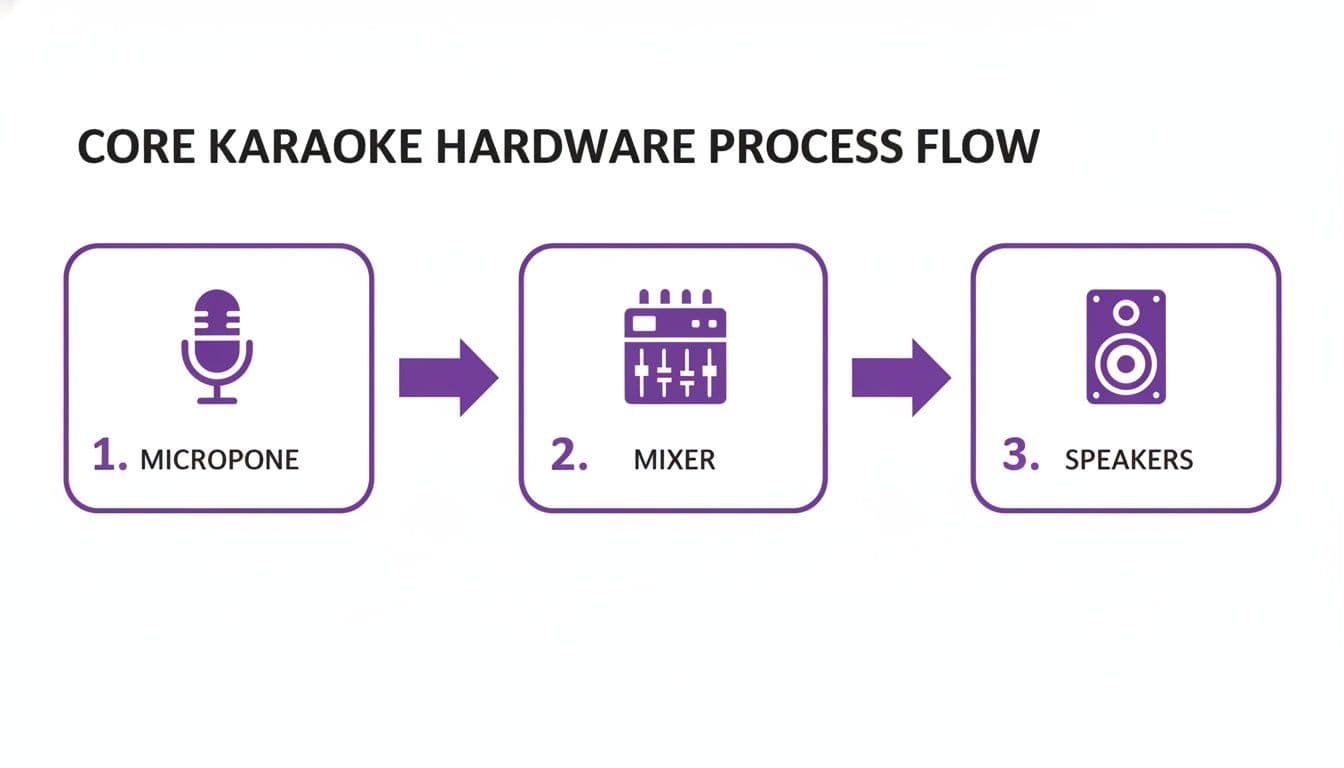
As you can see, the mixer is the heart of the operation, blending your mic input with the music track for a clean, lag-free sound.
Using AI for Quick and Dirty Lyric Syncing
This is a massive time-saver. MyKaraoke Video has an AI-powered auto-sync feature that listens to your audio, reads the lyrics, and lines them up with surprising accuracy. With just one click, the tool does the heavy lifting, placing each line of text right where it belongs in the song’s timeline.
For most pop songs, this gets you about 90% of the way there in a matter of seconds. It's especially good with tracks that have a clear, standard structure. If you're looking to streamline this process even further, an AI lyric video generator can be a fantastic starting point before you jump into the fine-tuning stage.
This initial AI pass takes care of the tedious work, letting you focus on perfecting the timing and adding your own creative flair instead of starting from scratch.
Getting Hands-On with the Manual Sync Editor
The auto-sync is a great start, but true perfection is in the details. The manual sync editor is where you can dial in the timing for every single syllable. This is absolutely critical for K-Pop, which is famous for its complex rhythms and lightning-fast rap verses that can sometimes trip up the AI.
The editor gives you a visual of the audio waveform, so you can drag the start and end points of each lyric line with surgical precision.
- Zoom In for Accuracy: Get up close with the waveform to see the exact moment a word is sung. This ensures your lyrics highlight at the perfect instant.
- Split and Merge: For those rapid-fire rap parts, you can split a single line into smaller, individually-timed chunks to keep up with the artist.
- Live Preview: As you make tweaks, you can play it back instantly to see how it feels. It makes getting a smooth, natural flow so much easier.
Honestly, taking the time to manually polish the sync is what separates a decent karaoke video from a truly great one. It’s that attention to detail that makes the experience immersive and easy for singers to follow, especially with the nuances of Korean lyrics.
Styling Hangul Lyrics for Readability and Vibe
Timing is one thing, but visuals are just as important. A top-notch Korean karaoke system needs videos that are easy to read and look great. This is where you can really match the video's aesthetic to the song's mood.
First, pick a font that displays Hangul characters clearly. A clean, modern sans-serif font is almost always a good choice. From there, you can play with colors, add outlines, or use drop shadows to make the text pop against whatever background you choose.
Think about the song's energy. A bright, upbeat track from a group like TWICE might call for vibrant, playful colors, while a soulful ballad would look better with a more elegant, subdued style. We've built the MyKaraoke Video interface to be super flexible for exactly this reason. For more ideas on how to get started, you should check out our guide on using an online https://www.mykaraoke.video/blog/lyric-video-creator-online.
You can also drop in dynamic backgrounds, like looping video clips or high-res images, to complete the professional vibe. By the time you’re done, you’ll have a high-quality, custom-made video that’s ready to be the star of your karaoke night.
Connecting and Playing Your Karaoke Content
Alright, you've picked out your gear and started building an awesome library of custom lyric videos. Now for the fun part: plugging it all in and bringing your Korean karaoke system to life.
The goal here is a setup that just works. You want anyone to be able to walk up, find a song, and start singing without needing a 10-minute technical briefing.
Getting All Your Gear Talking
Let's break down the physical connections. It’s actually pretty simple once you see how the pieces fit together. Your audio mixer is the heart of the operation.
Think of it as the central hub. Your microphones plug right into the mixer's input channels. Your music source—which is probably a laptop playing your custom videos—connects to the mixer, too. The mixer then takes the vocals and the music, blends them perfectly, and sends the combined audio out to your speakers. Simple as that.
The video side is even easier. Just run an HDMI cable from your laptop straight to your TV or projector. By keeping the audio and video paths separate like this, you completely sidestep that frustrating audio lag that kills the vibe in so many DIY karaoke setups.
How to Play Your Tracks
You’ve got a couple of solid options for playing back your exported MyKaraoke Video files. The best choice really just depends on whether you prefer convenience or total control.
For maximum flexibility, running everything from a dedicated laptop is the way to go. Just export your videos as high-quality 1080p MP4 files and use any media player you like—VLC is a classic for a reason. This approach lets you build playlists on the fly, search for songs instantly, and tweak settings without stopping the party.
If you want a dead-simple, plug-and-play solution, load your MP4 files onto a USB stick. Most modern smart TVs have a built-in media player that can read files directly from a USB drive. You lose some of the fancy playlist features, but for a casual get-together where you just want to press play and sing, you can't beat the simplicity.
Your Digital Songbook is Key
A messy library is a party killer. Nobody wants to watch you scroll through a chaotic folder of video files for five minutes. Trust me, spending a little time organizing your song library now will make every karaoke night so much smoother.
Here's a system I've found works really well:
- Sort by Artist: Create a main folder for each artist, like "BTS," "BLACKPINK," or "IU." This is how most people naturally look for songs.
- Build Vibe-Based Playlists: Use your media player to create playlists for different moods. Think "Upbeat Dance Tracks," "Classic Ballads," or "90s K-Pop Hits."
- Use a Clean Naming System: A consistent filename format like
Artist - Song Title.mp4makes searching for a specific track incredibly fast and easy.
Here’s a pro tip: Keep a simple spreadsheet or a shared document listing all the songs you have. Guests can just pull it up on their phones to pick their next song, which keeps the energy up and the downtime to a minimum. It’s a small touch that makes a home setup feel way more professional.
As you look into playback software, you might see how a general tool like their dedicated app could fit into your workflow. The right software can make managing even a huge song library feel like a piece of cake.
When you nail both the physical connections and your digital organization, your Korean karaoke system becomes a joy to use. For a deeper dive into the specifics of wiring your equipment, check out our complete guide on setting up your karaoke system. Getting this foundation right means every session is all about hitting the high notes, not troubleshooting tech.
Sample System Setups and Pro Tips
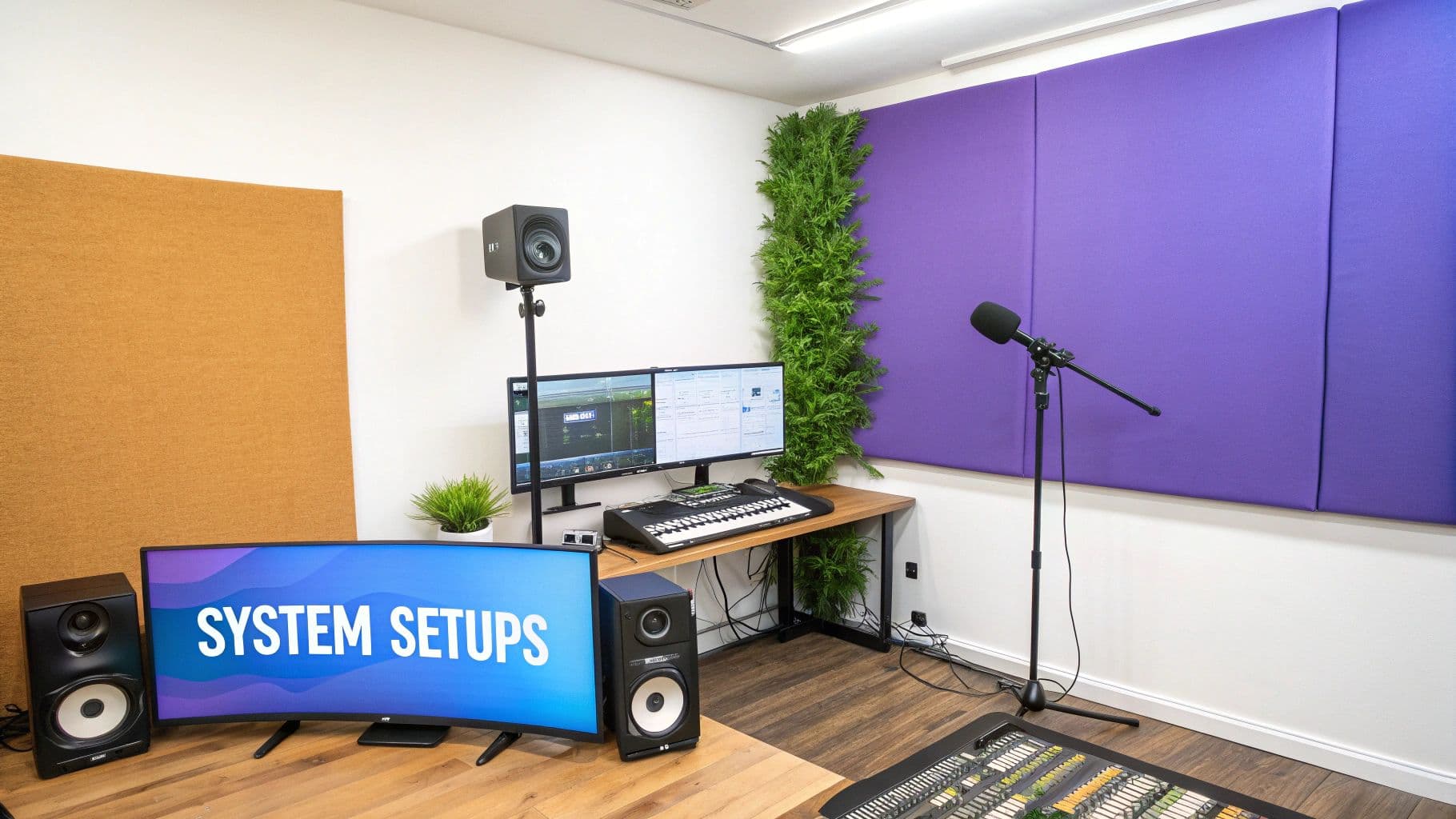
Alright, we've covered the individual parts. Now, let's see how they all plug together in the real world. I've put together three common blueprints for a Korean karaoke system—one for a cozy apartment, one for a small venue, and a studio setup for content creators. You can use these as a starting point or just pick and choose the ideas that work for you.
And it's not just a niche hobby. The demand for great home entertainment is exploding. The household karaoke market was already valued at a staggering USD 3,905.3 million in 2022. It’s a clear sign that people are serious about bringing this experience home. You can dig into the numbers yourself and check out the data on the growing home karaoke market to see where things are headed.
The Apartment Noraebang
Living in a smaller space doesn't mean you have to give up on the noraebang dream. This setup is all about getting that big, authentic sound without rattling the walls or cluttering your living room. It’s compact, neighbor-friendly, and surprisingly effective.
- The Gear: Grab a couple of quality wired dynamic mics, a small 4-channel mixer (make sure it has built-in reverb!), and a good set of powered bookshelf speakers. Your smart TV is the perfect screen for this.
- Your MyKaraoke Video Plan: The simplest way is to create your videos and export them as 1080p MP4 files. Just keep them on a laptop. You can run a cable from the laptop’s headphone jack to your mixer for audio and an HDMI cable to the TV for the video.
- Who It's For: Perfect for anyone in an apartment or condo who wants a genuine karaoke night with friends without a massive, complicated setup.
This proves a fantastic Korean karaoke system is more about making smart choices with your gear than just buying the biggest speakers you can find.
The Small Venue Powerhouse
This is the rig for bigger spaces—a dedicated party room, a small bar, or a community center. It's built to fill a room with sound, handle multiple singers at once, and turn a get-together into a real event.
Here, it's all about scaling up. You're moving from consumer gear to more durable, semi-pro hardware that can handle the volume and constant use.
A quick tip from experience: manage your song queue! A simple app or even a small whiteboard where guests can write their names and song choices saves a ton of headaches. It keeps things fair and lets you focus on hosting instead of playing traffic cop all night.
For a setup like this, your workflow needs to be fast and reliable.
- The Gear: Go with four wireless microphones so people can move around. An 8-channel mixer will give you plenty of inputs for mics and other audio sources. For sound, a pair of 10-inch powered PA speakers will deliver the punch and clarity you need.
- Your MyKaraoke Video Plan: Keep a master library on a dedicated computer. I recommend organizing all your files into playlists by genre or artist in a media player like VLC. It makes finding a guest's request a breeze.
- Who It's For: Small business owners, event organizers, or anyone with a big basement looking to entertain larger crowds.
The Content Creator Studio
If you're serious about creating content for YouTube or Twitch, this is your setup. The goal here is pristine audio and high-fidelity video. You're not just having fun; you're running a production.
This moves beyond live entertainment into actual media creation. Every single component is chosen for its recording quality.
Audio Is Everything
Instead of a basic mixer, you'll want a proper audio interface. This lets you capture clean, multi-track recordings on your computer, so you can mix and master the vocals and music separately in post-production for that polished, professional sound.
Don't Forget the Visuals
Good lighting and a clean background are just as critical as the sound. Think about using a green screen if you plan on adding custom backgrounds, or at least stage a visually interesting backdrop that fits your channel's vibe.
- The Gear: A professional condenser microphone is a must for studio-quality vocals. Pair it with a multi-channel audio interface, a set of studio monitor speakers for accurate playback, and a 4K webcam or mirrorless camera for sharp video.
- Your MyKaraoke Video Plan: Create your lyric videos in MyKaraoke Video and export them at the highest quality. Use screen recording software like OBS Studio to capture the lyric video playback, your live camera feed, and the clean audio from your interface all at once.
- Who It's For: YouTubers, streamers, and musicians aiming to produce high-quality K-Pop covers or host interactive online karaoke nights for their followers.
Sample Korean Karaoke System Configurations
To make it even clearer, here’s a table that breaks down these three distinct approaches. Think of it as a quick-reference guide for matching the right gear and workflow to your specific goals.
| Use Case | Key Hardware | Content Workflow with MyKaraoke Video | Best For |
|---|---|---|---|
| Home "Noraebang" | 2x wired mics, 4-channel mixer, powered bookshelf speakers, Smart TV | Export 1080p MP4 files to a laptop. Connect laptop audio to mixer and HDMI to TV for local playback. | Individuals and small groups in apartments or condos. |
| Small Venue/Bar | 4x wireless mics, 8-channel mixer, 10-inch PA speakers, projector/large TV | Maintain a master library on a dedicated PC. Organize songs into playlists (VLC, etc.) for quick request management. | Small businesses, community events, and large home entertainment rooms. |
| Content Creation | Condenser mic, audio interface, studio monitors, 4K webcam/camera, PC with OBS Studio | Export max-quality lyric videos. Use OBS to screen capture video playback while recording live camera and audio interface inputs. | YouTubers, Twitch streamers, and online performers creating cover videos. |
Whether you're just looking for a fun night in or building a professional streaming setup, choosing the right components from the start will make all the difference.
Answering Your Top Karaoke Setup Questions
Putting together the perfect Korean karaoke rig is a fun project, but it’s natural to hit a few snags along the way. I've seen it all, and most people run into the same handful of questions. Let's walk through them so you can get your system running smoothly.
Do I Need a Special TV for This?
Nope, not at all. Any TV, computer monitor, or projector with an HDMI port will work just fine for showing the lyrics. The real magic isn't in the screen—it's all about how you handle the audio.
Here's the trick: send the video from your laptop or media player straight to the TV with an HDMI cable. But—and this is the important part—run the audio out to your external mixer first. This lets you perfectly mix the music and your microphone vocals together before the sound hits your speakers. The result is a clean, professional mix every time.
A word of warning: Don't rely on your Smart TV's apps or audio outputs to handle everything. You'll almost always end up with a noticeable audio lag that makes singing impossible. A dedicated media source and an external mixer is the only way to get a delay-free performance.
Can't I Just Use YouTube for My Songs?
You could, but for a serious setup, you’ll quickly find it falls short. YouTube is great for casual fun, but creating your own custom lyric videos with a tool like MyKaraoke Video gives you total control over the entire experience.
When you make your own tracks, you get to use high-quality audio files, not the compressed sound you often find on streaming sites. You can also design the visuals yourself, making sure the Hangul lyrics are perfectly synced, easy to read, and look great. Best of all, you're building a personal, ad-free library that's yours forever, so you never have to worry about a video getting taken down.
What's the Single Biggest Problem I Might Face?
Audio delay. Without a doubt, latency is the most common and maddening issue you'll encounter. It’s that distracting, off-beat echo you hear between the moment you sing and when your voice actually comes out of the speakers.
Nine times out of ten, this is caused by routing your microphone's signal through a TV or a complicated A/V receiver, both of which add processing time. The fix is simple and reliable: get an external audio mixer. By plugging your mics and your music source directly into the mixer, the sound is processed instantly, killing the delay and giving you a crisp, immediate response.
Where Can I Find Good Korean Instrumental Tracks?
Finding high-quality K-Pop instrumentals is actually easier than you'd expect. The labels often release them officially.
- Official Releases: Your first stop should be streaming platforms like Spotify and Apple Music. Just search for the song title and add "instrumental" or "inst." to your query.
- Digital Music Stores: You can often buy studio-quality instrumentals from places like iTunes. This is a great way to get pristine audio.
- YouTube Music: This is another solid place to look for official instrumental uploads from the artists' channels.
Always grab the best quality you can find. A 320kbps MP3 is good, but a lossless file like a WAV is even better. The higher the quality of your source audio, the more powerful and dynamic your final karaoke track will sound.
Ready to build a library of incredible, perfectly synced lyric videos for your new system? MyKaraoke Video has everything you need to craft professional-quality songs without the technical headaches. Start building your custom K-Pop collection today at https://www.mykaraoke.video.
