If you’ve ever been to a noraebang (Korean for "singing room"), you know it’s a whole different world from your average karaoke night. Korean karaoke machines are the heart of that experience. They aren't just simple sing-along devices; they're high-tech entertainment hubs built to give you a main-stage, concert-like feeling right in your own home.
These systems are designed from the ground up to be more than just a microphone and a speaker. They combine professional-grade audio tools with massive, culturally rich song libraries, creating an immersive social event every time you turn one on.
Why Korean Karaoke Is a Global Sensation
Think of a typical karaoke machine as a basic setup for singing along. A Korean karaoke machine, on the other hand, is like having a personal recording studio packed into a sleek, easy-to-use console. The core difference is the focus: it’s not just about singing, it’s about performing.
These machines are engineered to make you sound incredible. They come loaded with features like real-time vocal scoring that gives you feedback on your pitch and timing, studio-quality echo controls, and stunning high-definition video backgrounds. Suddenly, a casual get-together transforms into a full-blown production.
This obsession with performance quality comes straight from South Korea's vibrant noraebang culture. While the idea of karaoke started elsewhere, Korea truly adopted it as a national pastime, which drove the technology forward and wove it into the fabric of social life. To get the full story, you can learn where karaoke originated in our detailed guide.
From Social Hubs to Home Entertainment
The evolution from private singing rooms to a global home entertainment phenomenon is pretty incredible. Korean karaoke became a social cornerstone back in the 1980s. By 1990, there were over 30,000 noraebang rooms operating across South Korea. Today, the domestic market is worth around $2.5 billion, all built on a culture where performance and social bonding go hand in hand.
This cultural weight forced manufacturers to constantly innovate, which is how we ended up with the sophisticated systems available today. And don't think it's all just K-pop. Their songbooks are enormous, often featuring tens of thousands of tracks in multiple languages, making them a fantastic choice for music lovers all over the world.
The true appeal of a Korean karaoke machine lies in its ability to replicate the energy and polish of a live performance. It’s an all-in-one solution that provides the tools, the tracks, and the atmosphere for anyone to feel like a star.
To really see what makes them stand out, it helps to compare them to other systems you might find. The differences really highlight why noraebang machines have earned such a dedicated following worldwide.
Karaoke Systems at a Glance
This table gives you a quick snapshot of what sets Korean systems apart from their Japanese and Western counterparts.
| Feature | Korean Systems (Noraebang) | Japanese Systems (J-Pop/Anime Focus) | Western Systems (Bar/Home Focus) |
|---|---|---|---|
| Primary Focus | Performance Quality & Social Experience | Song Accuracy & Extensive J-Pop Library | Simplicity & Portability |
| Vocal Features | Advanced (scoring, echo, key control) | Standard (basic echo, key control) | Basic (often limited to volume) |
| Song Updates | Frequent, often via internet subscription | Regular, sometimes via physical media | Infrequent or relies on user-provided tracks |
| User Interface | High-tech (touchscreens, remote apps) | Functional but often more traditional | Simplified, often button-based |
As you can see, each type of system is built for a different kind of experience. While Western models prioritize ease of use and Japanese systems focus on their incredible domestic music libraries, Korean machines are all about delivering a premium, feature-rich performance.
What's Really Under the Hood of a Noraebang Machine?
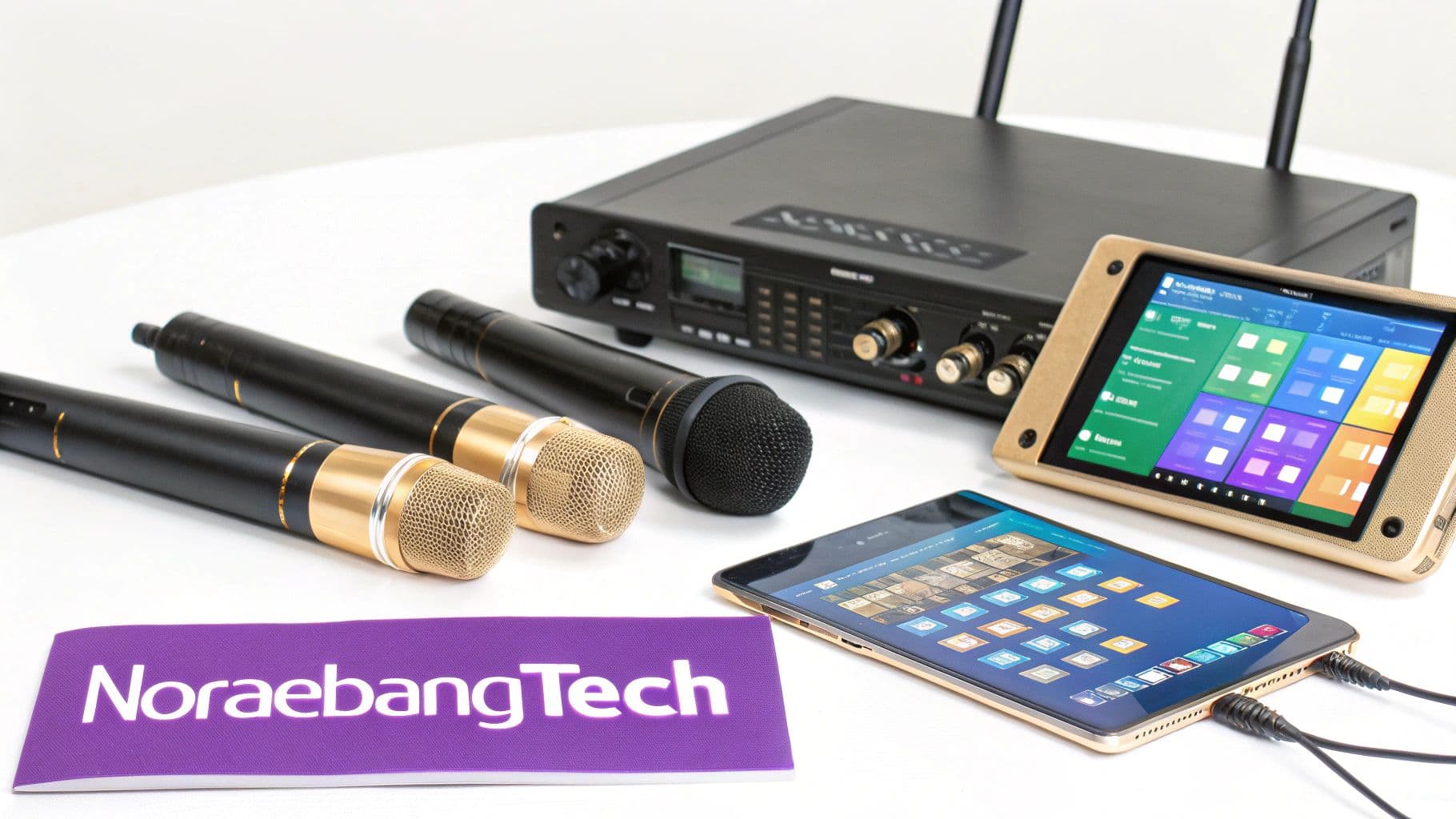
So, what’s the real difference between a high-end Korean karaoke machine and a basic model you might find at a big-box store? It’s not just about the flashy lights. The secret lies in the specialized, high-performance components working in perfect harmony.
Think of it like building a top-tier gaming PC. You wouldn't just grab any old parts; you'd want a powerful graphics card for stunning visuals and a premium sound card for immersive audio. A noraebang machine is built on the same principle. A dedicated video processor handles the crisp, high-definition background videos, while a sophisticated sound module manages everything from studio-quality echo to real-time vocal scoring.
Once you understand what these core components do, you can see right through the marketing hype and focus on the specs that actually deliver that authentic, concert-like experience.
The Sound Module: The Heartbeat of the Machine
If there's one component that defines the experience, it's the sound module. This is the central nervous system for all things audio. It’s responsible for seamlessly mixing your voice with the backing track, adding professional-grade effects, and ensuring the final sound is clean, powerful, and polished.
A quality sound module gives you incredible control over your performance. Key features to look for include:
- Real-Time Vocal Scoring: This is more than just a gimmick. The tech analyzes your pitch and timing against the original track and gives you instant feedback. It adds a fun, competitive edge to any karaoke night.
- Studio-Grade Echo and Reverb: We're not talking about a simple, tinny echo. These effects are designed to add genuine depth and warmth to your voice, making you sound fuller and more professional.
- Advanced Key and Tempo Control: A must-have feature. This lets you shift a song's key to perfectly match your vocal range or slow it down to nail a tricky part—all without that awful, distorted audio you get on cheaper systems.
These audio processing capabilities are what truly set Korean machines apart, turning any amateur singer into a stage-ready performer. If you want to dive deeper into the basics, check out our guide on how karaoke machines work.
The Visual Engine: Setting the Stage
While the audio is king, the visuals create the atmosphere. A modern Korean karaoke machine doesn't just loop generic nature scenes. It pulls from a massive library of high-definition, often thematic, video backgrounds that actually sync with the mood and tempo of the music.
This visual flair is driven by a dedicated processor that ensures silky-smooth playback with zero lag. But it's also about connectivity. These systems are designed to be the centerpiece of your entertainment setup, loaded with outputs like HDMI for sharp video, optical audio for pristine sound, and USB ports for playing your own media.
The real magic of the noraebang experience comes from the synergy between a powerful sound module and a high-definition video processor. It’s a full sensory experience designed to make you feel like you’re on stage.
This dedication to quality has propelled Korean brands to the top of the global market. Take a company like TJ Media, which now holds a 20% share of the international karaoke equipment market. Here in North America, where karaoke is booming, Korean imports account for a massive 25% of all sales in commercial venues. That’s a powerful testament to their superior tech.
When you invest in one of these machines, you're not just buying a music player. You're getting a finely tuned piece of entertainment technology where every single component is optimized for one thing: an unforgettable performance.
Getting Your Machine Hooked Up
Think of your Korean karaoke machine as the new command center for your entire entertainment system. It's not just a box that plays songs; it's the heart of the whole operation. To really make it sing (pun intended), you need to get it talking to all your other gear—your TV, your speakers, and any other sources you use.
Getting this right is all about creating a clean, direct path for the audio and video. The goal is simple: what you see and hear should be as crisp and powerful as possible. Let's walk through how to connect everything.
Core Connections: Getting Picture and Sound
The absolute basics are getting the picture to your screen and the sound to your speakers. Thankfully, modern Korean karaoke machines make this pretty straightforward with HDMI (High-Definition Multimedia Interface). This one cable is your best friend—it handles both high-quality digital video and audio, sending it straight to your TV or projector.
Now, if you've invested in a decent soundbar or a full home theater receiver, you'll want to use the optical audio output. This port sends a pure digital audio signal directly to your sound system, completely bypassing your TV's often-underwhelming speakers. This is the way to go if you want to hear every detail in the music and your own soaring vocals.
Here’s a quick look at the ports you'll be using:
- HDMI Output: The go-to, all-in-one cable for both video and audio. For most setups, this is all you'll need to connect to your display.
- Optical Audio Output: The pro choice for connecting to a dedicated sound system. It keeps the audio signal clean and powerful.
- Analog Audio Outputs (RCA): You'll see these less and less, but the classic red and white ports are still handy for hooking up older amps or stereos that don't have digital inputs.
Going Wireless and Playing Your Own Media
Cables are only half the story. Today's machines live in the wireless world. Wi-Fi is pretty much standard now, and its main job is to pull down the latest song updates from the manufacturer. This is how you keep your songbook fresh with the newest K-pop hits and global chart-toppers without messing with discs or downloads.
Bluetooth is another key feature, letting you turn the karaoke machine into a high-quality speaker. You can stream music directly from your phone or tablet, which is perfect for playing a Spotify playlist when you need a break from singing.
But here’s where things get really interesting: these machines aren't just for playing the songs that come with them. They're built to be flexible media hubs that can play files from almost any source.
This is how you truly make the karaoke experience your own. Most systems come with USB ports, so you can load up a thumb drive with your own audio and video files. This opens up a whole new world of custom songs that aren't in the official catalog. You can see how this all fits into a complete configuration in our detailed guide on setting up your karaoke system.
Building a Custom Songbook with Your Own Videos
The ability to play your own media files is a massive advantage, especially for content creators or anyone hosting a special event. You can use a browser-based tool like MyKaraoke Video to create your own professional-looking karaoke tracks for literally any song you can think of.
It's a really simple process:
- Create the Video: Just upload an MP3 of the song, paste in the lyrics, and the tool syncs it all up. You can then jump in and tweak the timing with a super easy editor.
- Style It Your Way: Change the fonts, colors, and backgrounds to fit your personal brand or the theme of your party.
- Export Your File: Once it looks perfect, export the video as a standard 1080p MP4 file.
- Play It on the Big Screen: Copy the MP4 file to a USB drive, plug it into your karaoke machine, and you’re ready to go.
This simple workflow means you can add anything to your setlist—rare B-sides, your own original songs, or that obscure international track you love. By combining a powerful machine with modern tools, you can turn your karaoke setup from a simple playback device into a completely personalized entertainment hub.
Your Step-By-Step Installation Guide
So, you've just unboxed your new Korean karaoke machine. It's exciting, but staring at a box of high-tech gear and a tangle of cables can feel a little intimidating. Don't sweat it—getting everything up and running is way more straightforward than it looks.
Think of it like putting together a home theater system. You have three main parts to connect: the video (what you see), the audio (what you hear), and the media (your song library). We'll tackle each one in order and get you from unboxing to showtime in no time.
Laying the Foundation: Your Core Connections
First things first, let's get the picture on your screen and sound flowing through your speakers. The most crucial tool for this job is the HDMI cable. This one cord does double duty, carrying both high-definition video and crystal-clear digital audio from your karaoke machine straight to your TV or projector. For most people, that's all you'll ever need.
But if you're serious about your sound and have a dedicated soundbar or a home theater receiver, you'll want to take things up a notch. Use an optical audio cable to send the sound directly from the karaoke machine to your audio system. This move bypasses your TV's built-in speakers—often the weakest link in any setup—giving you a much richer, more powerful soundstage for your performances.
This little infographic lays out the basic flow perfectly.
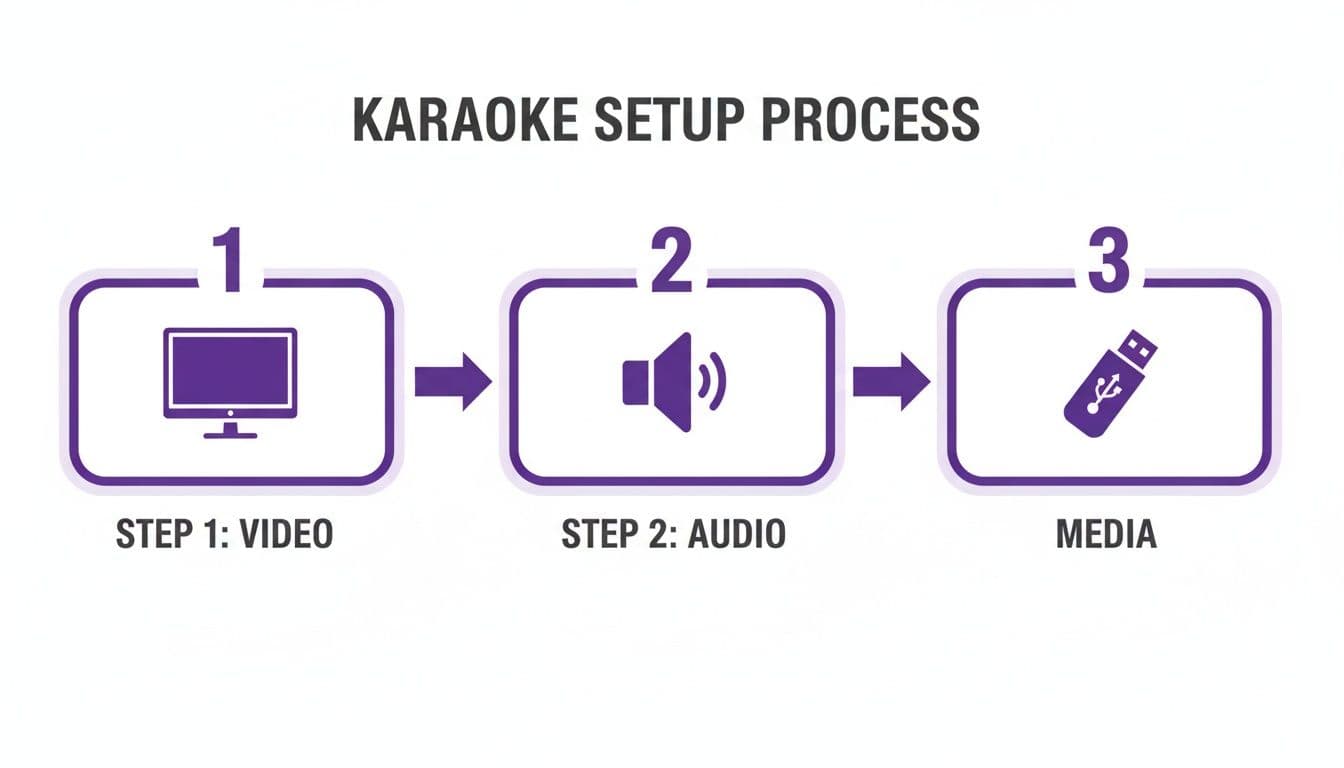
You can see how the machine acts as the central hub, sending the right signals out to your display and sound system to bring the whole experience together.
Calibrating Your Microphones for Clarity
With your video and audio hooked up, it's time to bring in your voice. Most Korean karaoke machines ship with a pair of wireless mics that are already paired to the main unit. Getting them started is as simple as popping in the batteries and flipping the power switch. You should see an indicator light on the receiver glow, confirming they're connected.
Now for the fine-tuning. We've all heard that ear-splitting squeal of microphone feedback. It happens when a mic picks up its own amplified sound from the speakers, creating a nasty loop. Here’s how to kill it before it starts:
- Never, ever point a microphone directly at a speaker. This is the number one cause of feedback.
- Try to sing from behind the main speakers. This position puts a physical barrier between the mic and the sound output.
- Start with the volume low. Turn the mic and master volume knobs all the way down. Then, slowly bring them up until you hit a good level without any squealing.
A good rule of thumb is to set the music volume first. Once that's where you want it, bring up the microphone volume until your voice sits clearly on top of the track, not buried underneath it.
Troubleshooting Common Setup Headaches
Even with the most careful setup, you might hit a snag. It happens. Here’s a quick-hitter guide to solving the most common issues you'll encounter.
- No Sound or Picture: Check your cables. Make sure everything is plugged in snugly, and then double-check that your TV is set to the correct HDMI input. A surprising amount of the time, just turning the karaoke machine and the TV off and on again will fix it.
- Audio Delay (Lip Sync Issues): If the singer's lips on screen don't match the audio you're hearing, the culprit is usually your TV's internal sound processing. Dive into your TV’s settings menu and look for a "Game Mode" or an "Audio Sync" adjustment. Switching to one of these modes often solves the lag. Connecting your sound directly to an external receiver with that optical cable also helps.
- Microphone Not Working: It's almost always the batteries. If you've put in a fresh pair and still get nothing, check to see if the mic is paired with the receiver. Most systems have a simple "pair" button or a process you can find in the user manual.
- Can't Play USB Files: Make sure your USB drive is formatted to a compatible file system, which is usually FAT32 or exFAT. Also, check that your media files are in a format the machine can read—typically MP4 for video and MP3 for audio.
Follow these steps, and you'll be able to tackle any little hiccups that come your way, ensuring your first karaoke night is a smash hit.
Finding the Perfect Korean Karaoke Machine for You
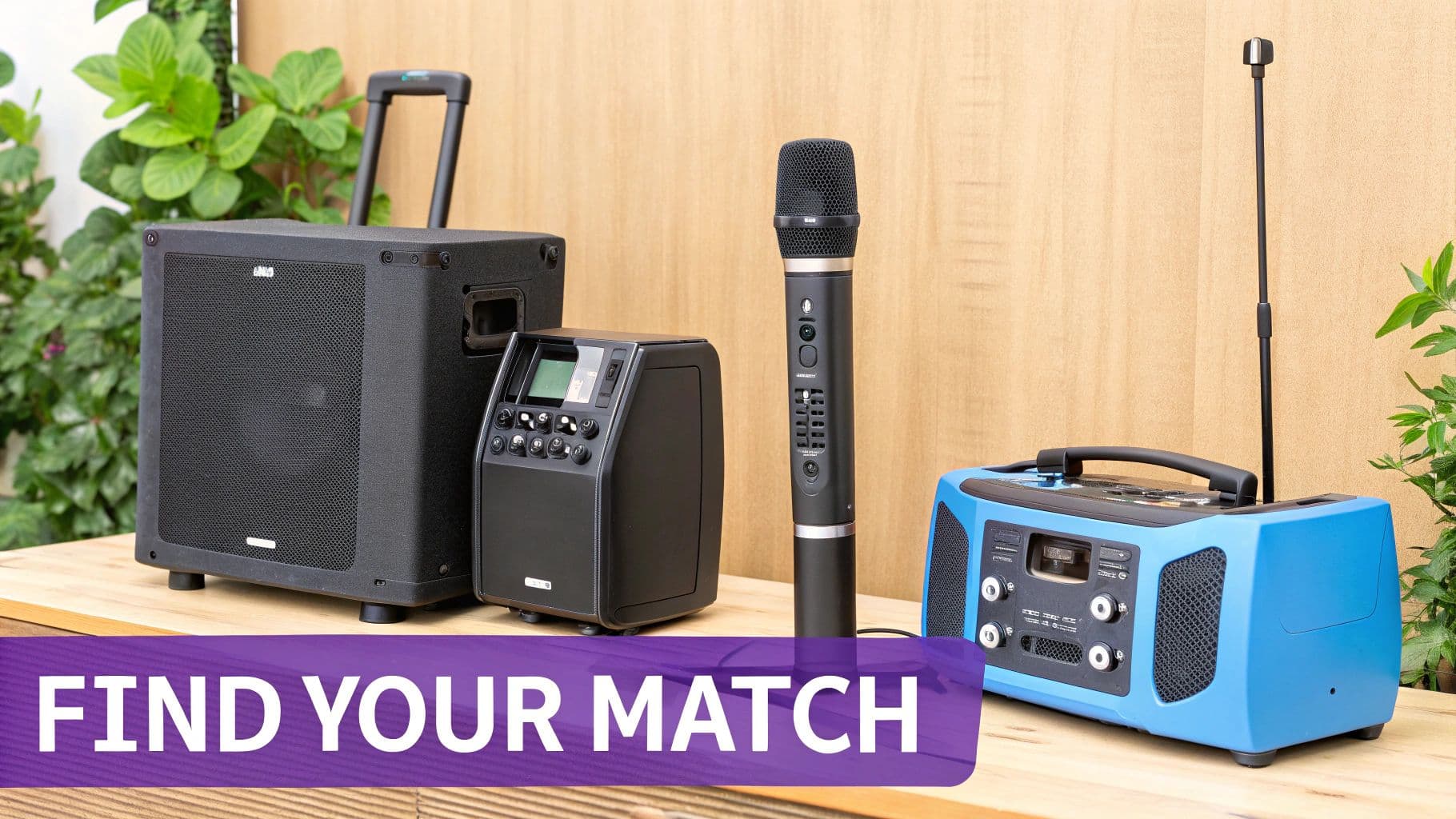
Choosing the right Korean karaoke machine is less about finding the "best" one and more about finding the right one for you. The perfect system for a casual family sing-along is worlds apart from what a professional venue or a serious content creator needs. It all boils down to how you plan to use it.
To make the best choice, you've got to match your goals with the right features. Let's walk through the most common scenarios and pinpoint the must-have specs for each, so you can invest in a machine that truly delivers.
For the Casual Home Singer
If your main goal is hosting unforgettable karaoke nights for family and friends, you can skip the complex commercial rigs. Your priorities should be simplicity, a massive song selection, and all-in-one convenience. The home karaoke market is a massive, multi-billion dollar industry, and Korean-designed systems have carved out a huge space in premium setups. Many now include AI-assisted scoring that’s accurate to within 95% of a professional vocal analysis, which explains their surge in popularity. You can find more insights on the karaoke market growth on this page.
When you're shopping for a home model, keep an eye out for these features:
- All-in-One Design: Many home systems bundle the player, amplifier, and even speakers into a single, portable unit. This makes setup a breeze and storage a non-issue.
- Large, Multilingual Song Library: Look for machines with tens of thousands of pre-loaded songs. A good mix of K-pop, English pop, and other international hits ensures there's something for every guest.
- User-Friendly Interface: A simple remote, a clear on-screen menu, or a handy smartphone app makes it easy for anyone—even the non-tech-savvy—to jump in and queue up their favorite song.
- Wireless Microphones: Cords are a hassle. Wireless mics are practically a must-have for home use, preventing trips and giving performers the freedom to bust a move.
For the Dedicated Content Creator
Are you building a YouTube channel or streaming your performances? Your needs shift from simple fun to production quality. You need a machine that gives you granular control over audio and video, essentially turning your setup into a mini-studio.
For this kind of work, you'll need more advanced capabilities. Focus on systems that offer robust connectivity and customization, allowing you to fine-tune every part of your final output.
The key difference for creators is control. You need a system that not only sounds great out of the box but also gives you the tools to record, mix, and export your performances with professional polish.
Here are the essential features for a creator-focused machine:
- High-Quality Audio Outputs: Look for separate stereo outputs. This lets you send clean, isolated audio to an external mixer or recording interface for professional-grade sound.
- Video Customization: The ability to use your own background videos via USB is a game-changer. It’s crucial for branding your content and creating a look that’s uniquely yours.
- Recording Functionality: Many higher-end models can record your vocals along with the music, saving the final track as an MP3 to a USB drive. This makes editing and sharing your work incredibly simple.
For Commercial Venues and Event Professionals
If you're running a noraebang, a bar, or an event rental business, your checklist looks completely different. These machines have to be absolute workhorses—incredibly durable, easy to manage at scale, and packed with features designed for public use.
Commercial Korean karaoke machines are built like tanks to withstand constant operation. They're defined by their ruggedness and sophisticated management tools. You'll want to look at established commercial brands like TJ Media or Kumyoung, which have a proven track record in these demanding environments.
A commercial setup requires a very specific feature set:
- Rack-Mountable Chassis: Commercial units are often designed to slot into standard equipment racks. This keeps everything secure, organized, and professional-looking.
- Coin/Bill Acceptor or Payment Integration: For any public karaoke business, the ability to accept payment for song credits is a fundamental requirement.
- Frequent and Reliable Song Updates: Your customers expect the latest hits. Look for systems with subscription-based network updates that keep the songbook fresh and current.
- Remote Management: Advanced models allow owners to monitor usage, change settings, and even troubleshoot problems remotely—an absolute lifesaver when you're managing multiple rooms or locations.
To help you visualize the difference between the big players, here's a look at how some popular models stack up. This table contrasts top-tier options to help you decide which system best fits your specific needs and budget.
Brand Showdown: TJ Media vs Kumyoung
| Feature | TJ Media (Home Series) | TJ Media (Commercial Series) | Kumyoung (Vivaus Series) |
|---|---|---|---|
| Primary Use Case | Home entertainment, family parties | Noraebangs, bars, restaurants | High-end home use, commercial venues |
| Song Library Size | 30,000 - 50,000+ songs (multilingual) | 50,000 - 80,000+ songs, network updates | 40,000 - 70,000+ songs, network updates |
| Update Method | USB update packs (purchased periodically) | Monthly subscription-based online updates | Subscription-based online or USB updates |
| Key Feature | AI scoring, Bluetooth connectivity, user-friendly app | Payment integration, remote management, rack-mountable | 4K video output, customizable backgrounds, studio-quality sound |
| Connectivity | HDMI, USB, Optical Audio | HDMI, Component, LAN, multiple audio outputs | HDMI 2.0, USB 3.0, LAN, professional audio outputs |
| Best For | Users who want a simple, high-quality, all-in-one solution. | Business owners needing a durable, manageable, and profitable system. | Prosumers and venues demanding the absolute best in audio/video quality. |
Ultimately, whether you choose a TJ Media machine for its user-friendly home features or a Kumyoung system for its top-tier performance, understanding these differences is the first step. Each brand offers incredible quality, but they cater to very different priorities.
Got Questions? We've Got Answers
Stepping into the world of high-end karaoke can feel a little intimidating. You've probably got questions floating around about how these machines actually work day-to-day. Don't worry, that's completely normal. Let's walk through some of the most common things people ask before they bring a Korean karaoke system home.
How Do Song Updates Actually Work?
This is probably the #1 question people have, and for good reason! The magic of modern Korean karaoke machines is that they never get stale. Gone are the days of fumbling with expensive song chips or bulky CD-G discs. Today, it’s all about digital delivery.
Machines from the big names like TJ Media and Kumyoung are built to connect right to your home Wi-Fi. This simple connection is your gateway to the manufacturer's massive song library. When new K-pop bangers or global hits are released, the machine can download them directly, keeping your songbook fresh and exciting.
But here's something you need to know before buying:
- Subscription Models: Most high-end and commercial systems run on a subscription. You pay a recurring fee (monthly or yearly) and get a constant pipeline of new music. It’s the best way to stay completely up-to-date.
- Pay-As-You-Go Updates: Some models built for home use offer a more flexible approach. You might get free updates periodically or have the option to buy "update packs" when you feel like your library needs a refresh. This can be easier on the wallet if you don't need every single new chart-topper right away.
Make sure you ask about the specific update model for any machine you're looking at. Knowing about any potential costs upfront means you can just focus on the fun later.
Can I Use My Own Songs or Custom Videos?
Yes, you absolutely can! This is where these systems really shine and show their flexibility. They aren't just locked-down jukeboxes; they’re powerful media players ready for your custom content. This is a game-changer for adding rare b-sides, instrumentals, or even your own original music to the mix.
Almost every modern unit has a USB port, and it’s there for exactly this reason. Just load your audio or video files onto a standard thumb drive, pop it in, and you can play them through the system’s high-quality sound processor. It’s dead simple.
This opens up a ton of creative doors. For instance, you could use a browser-based tool to make a custom lyric video for a song that isn't in the official library. Once you export that video as an MP4, just drag it onto your USB drive. Plug it into the machine, and you’re ready for the stage. It gives you total control over your karaoke night.
What's the Real Difference Between Home and Commercial Models?
On the surface, they can look pretty similar, but home and commercial Korean karaoke machines are engineered for two totally different worlds. The biggest divides are in their build quality, feature sets, and music licensing.
Commercial models are the tanks of the karaoke world. They’re built to survive the nightly abuse of a busy noraebang or bar, with industrial-grade parts designed to run for thousands of hours without a hiccup. They also have business-critical features baked in, like:
- Payment systems (for coins, bills, or cards)
- Usage timers to manage room billing
- Remote admin controls for owners
- Massive, commercially licensed songbooks with rock-solid update schedules
Home models are built for a different kind of life. They’re designed for family parties and weekend jam sessions, so they're sleeker, more affordable, and have a friendlier interface. While they aren't built to run 24/7, they still pack the same incredible audio and video punch, giving you that authentic noraebang feeling right in your living room.
What Else Do I Need for the Full Setup?
Your Korean karaoke machine is the brain of the operation, but it needs a team to put on a real show. To get that full, immersive experience, you’ll need a few other pieces of gear to handle the sights and sounds.
Think of the machine as your central command. It mixes your vocals with the track and generates the lyrics, but it needs other equipment to broadcast that performance to the world.
The karaoke machine is the heart of your setup, but your TV and speakers are its voice and stage. Pairing a great machine with a quality sound system is what separates a good time from an unforgettable one.
At a minimum, here’s what you’ll need to complete your setup:
- A Screen: Any modern TV, computer monitor, or projector will do the trick. You’ll connect the machine—usually with a standard HDMI cable—to display the lyrics and background videos.
- A Sound System: You can use your TV’s speakers, but you’ll be missing out. A dedicated soundbar, a home theater system, or a portable PA system will make the music and your voice sound a million times better.
- Microphones: Most machines come bundled with a pair of great wireless mics. But you can always upgrade or add more if you’re planning on epic group numbers.
With these three things in place, your karaoke machine becomes the powerful hub of a complete, pro-level entertainment system that's ready for any party you can throw at it.
Ready to create custom karaoke videos for any song you can imagine? With MyKaraoke Video, you can turn your favorite tracks into high-quality, personalized karaoke videos in minutes. Our browser-based tool makes it simple to sync lyrics, customize backgrounds, and export professional MP4 files perfect for your Korean karaoke machine. Start creating your first video for free today at MyKaraoke Video and build the ultimate custom songbook.