So, you’re ready to buy a karaoke machine. While it’s tempting to just click “add to cart” online, nothing beats getting your hands on the actual hardware before you buy. Heading out to local stores lets you see, touch, and—most importantly—hear what you’re getting. You might be surprised by the options hiding right in your neighborhood.
How to Find a Karaoke Machine in Your Area
Finding the perfect karaoke setup is part treasure hunt, part detective work. It’s about more than just a quick Google search; you need a solid local strategy. By learning how to search smart and knowing which doors to knock on, you can turn a frustrating chore into a fun and successful shopping trip.
The first move is to figure out what kind of stores are even likely to stock this stuff. This opens up your options way beyond what you'd find with a simple, generic search.
Mastering Your Local Search Strategy
Your best friend here is a map app, but you have to use it right. Instead of just typing in "karaoke machine," get a little more creative to uncover the hidden gems.
Try searching for terms like "pro audio store" or "music equipment shop." These searches often lead you to specialized retailers that stock higher-quality gear. Plus, the staff there usually know their stuff and can give you real advice.
Don't write off the big-box stores like Best Buy or even department stores like Target and Walmart. Their selection is often aimed more at casual home or family use, but they almost always have floor models you can check out. A little trick I use is to filter map results by stores with high ratings and then scan recent reviews for keywords like "karaoke" or "PA systems."
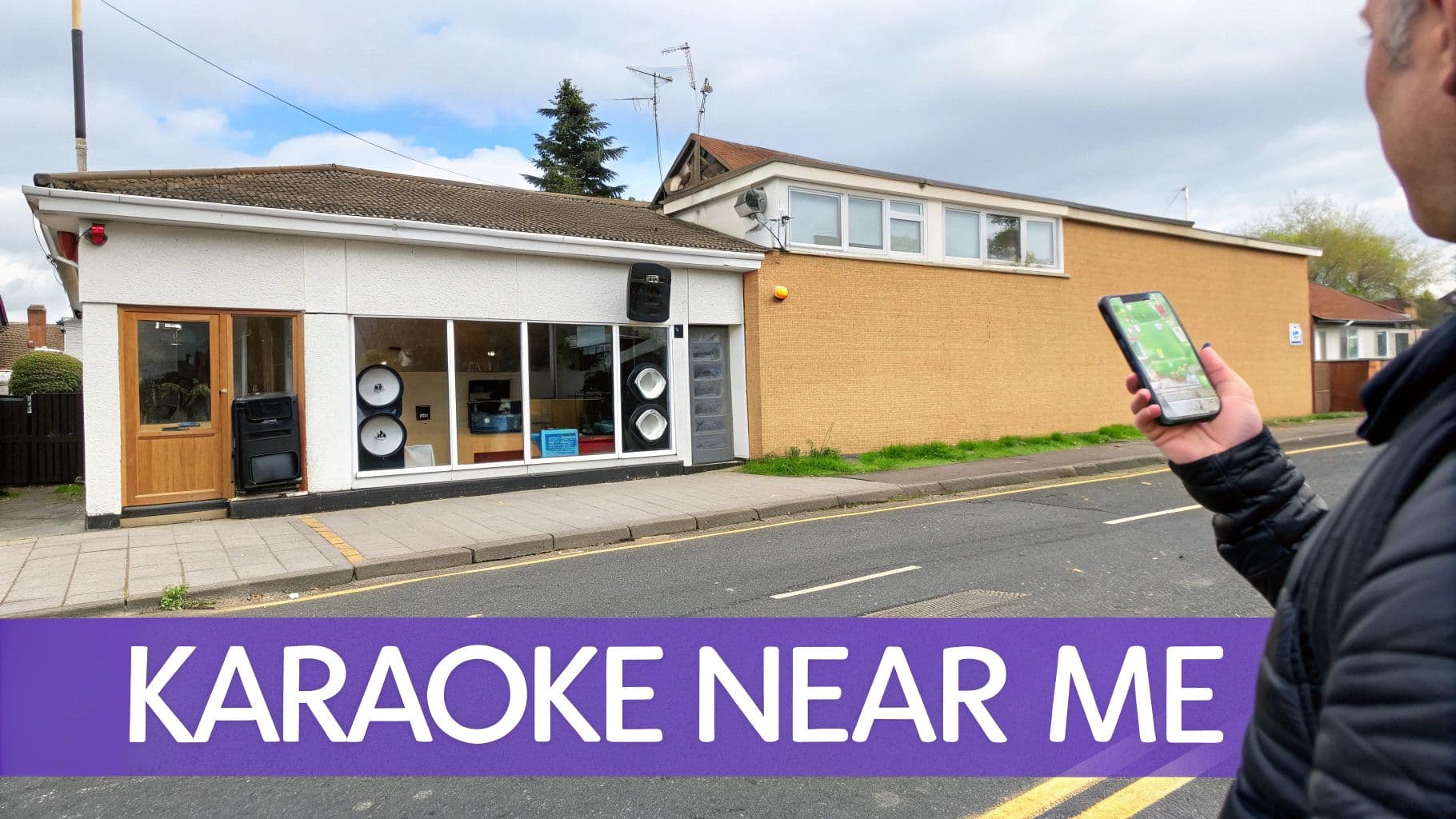
This visual-first approach helps you map out a game plan. You can see clusters of potential shops and plan an efficient route to hit several spots in one afternoon.
To give you a head start, here’s a quick rundown of the types of local places you should be checking out.
Where to Look for a Karaoke Machine Locally
| Store Type | What to Expect | Best For |
|---|---|---|
| Big-Box Electronics Stores | A decent selection of consumer-grade, all-in-one machines. | First-time buyers, families, and those looking for a simple, budget-friendly setup. |
| Music Instrument Shops | Professional and prosumer-level gear, including PA systems, mixers, and quality mics. | Serious hobbyists or anyone wanting to build a more powerful, customizable system. |
| Department Stores | Mostly kids' and novelty machines, especially around the holidays. | Gifts for children or a very basic machine for casual fun. |
| Second-Hand Stores & Pawn Shops | A complete wild card. You might find a high-end system for a bargain or nothing at all. | Treasure hunters and bargain seekers who don't mind a bit of a gamble. |
This table should give you a good idea of where to focus your energy depending on what you're looking for.
Preparing for Your Store Visits
Once you’ve got a list of places to check out, a few quick phone calls can save you a ton of time and gas. Before you grab your keys, call ahead and ask a few pointed questions:
- Do you have any karaoke machines in stock and on display right now?
- What’s the general price range for the models you carry?
- Is there anyone working today who can actually demonstrate the features for me?
This simple check prevents you from showing up to a store that’s sold out or doesn't have anyone who can help you. And as you're planning your party, keep in mind that many places offering party decor hire near me often have great recommendations for other local event suppliers.
Pro Tip: Don't sleep on second-hand shops like Goodwill or local pawn brokers. It's definitely a long shot, but I've heard stories of people finding barely used, high-end machines for a tiny fraction of the original cost. The potential savings make it worth a quick look if you have one nearby.
Testing a Karaoke Machine Before You Buy
Alright, you've found a local shop. You walk in, and there it is: a wall of shiny karaoke machines, all promising the party of a lifetime. The boxes are covered in specs and buzzwords, but honestly, that's only half the story. The real proof is in the performance, and this is your chance to see how a machine actually handles itself before you swipe your card.
Don't be timid. Ask a store employee if you can test drive a demo model—that's the whole reason you searched for a "karaoke machine near me" in the first place, right? I always recommend having your smartphone ready to go, so you can test it just like you would at home.
Evaluating Core Sound Quality
First things first, let's talk sound. A machine can have more flashing lights than a Vegas casino, but if the audio is thin and tinny, the party's over before it starts.
Have the salesperson crank the volume. As it gets louder, listen closely. Are you hearing any crackling, hissing, or a low buzz? A decent speaker should give you clean, clear audio right up to its max volume without getting distorted.
Next, connect your phone and play a song you know inside and out. I mean, really know. Pick something with a good mix of deep bass and high notes. How does it handle it? Does the bass sound muddy and undefined? Are the highs screechy or shrill?
A quality karaoke machine needs to handle the full dynamic range of music. If it sounds weak or flat in the quiet of a store, imagine how it will struggle to be heard over a room full of people singing and laughing.
Remember, karaoke isn't just a novelty anymore. People are serious about their setups, which is why the global market is projected to hit an incredible USD 14,457.1 million by 2034. You're investing in an experience, so don't settle for mediocre sound.
Putting the Microphones to the Test
The microphone is your connection to the music. You can instantly tell a well-made machine from a cheap toy just by how the mic feels and sounds.
Pick it up. Does it have some heft to it, or does it feel like hollow plastic? That alone tells you a lot. Now, speak into it at a normal volume and listen.
- Clarity: Is your voice coming through crisp and clear, or does it sound like you're talking through a blanket?
- Feedback: Walk around the speaker a bit. A high-pitched squeal when you get too close is normal, but if it's constantly screeching from a few feet away, that's a red flag for poor design.
- Wireless Range: If it's a wireless model, do a walk-around. Wander as far as you can in the store. Does the signal start to break up or get choppy?
Also, have a little fun with the built-in vocal effects. Most machines have echo or reverb. A touch of echo can make any singer sound a bit more polished, but you want to make sure the effect is adjustable and doesn't just drown your voice in a cavernous sound.
Checking Connections and Compatibility
Last but not least, take a good look at the back of the machine. You need to make sure it will play nice with the gear you already own. If you're just starting out, our guide on setting up karaoke equipment can give you a solid primer on what to expect.
Use your phone to test the Bluetooth pairing. Was it a quick, painless connection, or did you have to fight with it? Play a song to ensure the stream is stable and doesn't drop.
Then, do a quick inventory of the physical ports. These are the essentials you should be looking for:
- HDMI Out: This is a must-have for connecting to any modern TV to get those lyrics on the big screen.
- USB Port: Can it read a thumb drive full of MP3s? See if you can plug one in and navigate to a song.
- Auxiliary In/Out: An aux-in is a great backup for connecting devices with a simple cable, while an aux-out gives you the awesome option to hook up your own, more powerful speakers down the road.
By going through these key checks—sound, mics, and connectivity—you're doing more than just window shopping. You're making sure you walk out of that store with a machine that truly delivers, not just one that looked good on the shelf.
Should You Buy or Rent Your Karaoke Setup?
Once you start searching for a "karaoke machine near me," you’ll hit a fork in the road: do you buy a machine to keep, or just rent one for the party? There's no single right answer—it really boils down to how often you plan on grabbing the mic. Getting this decision right from the start can save you a surprising amount of money and logistical headaches.
If you're planning a one-off event—say, a huge birthday party, a wedding reception, or that yearly office get-together—renting is almost always your best bet. Rental services offer professional-grade gear that would cost a small fortune to buy outright. This way, you get incredible sound quality and reliable microphones without committing to a machine that will just gather dust in a closet.
When Buying Makes Sense
On the flip side, if karaoke nights are a regular tradition in your household, buying is the way to go. For families that love a good sing-off or aspiring content creators who need equipment on-demand, the cost of renting over and over again would quickly eclipse the purchase price of a great home setup. Owning it means you're always ready for a spontaneous performance.
Think about the breakeven point. A weekend rental might run you $150**, while a decent home machine could cost around **$400. Do the math—you'd break even after just three uses. For anyone who sings regularly, buying is an investment in endless entertainment.
It’s also worth noting how much technology is changing the game. The karaoke market is booming and is projected to reach USD 14,457.1 million by 2034, largely because of digital solutions that go beyond the boxy machine. As you consider your options, you might even ask if a physical machine is necessary at all. An app-based platform could be a better fit. You can read up on these market trends and more over at Dimension Market Research.
Whether you end up buying or renting, you'll want to run a few quick checks to make sure everything works. This simple diagnostic flowchart walks you through what to look for.
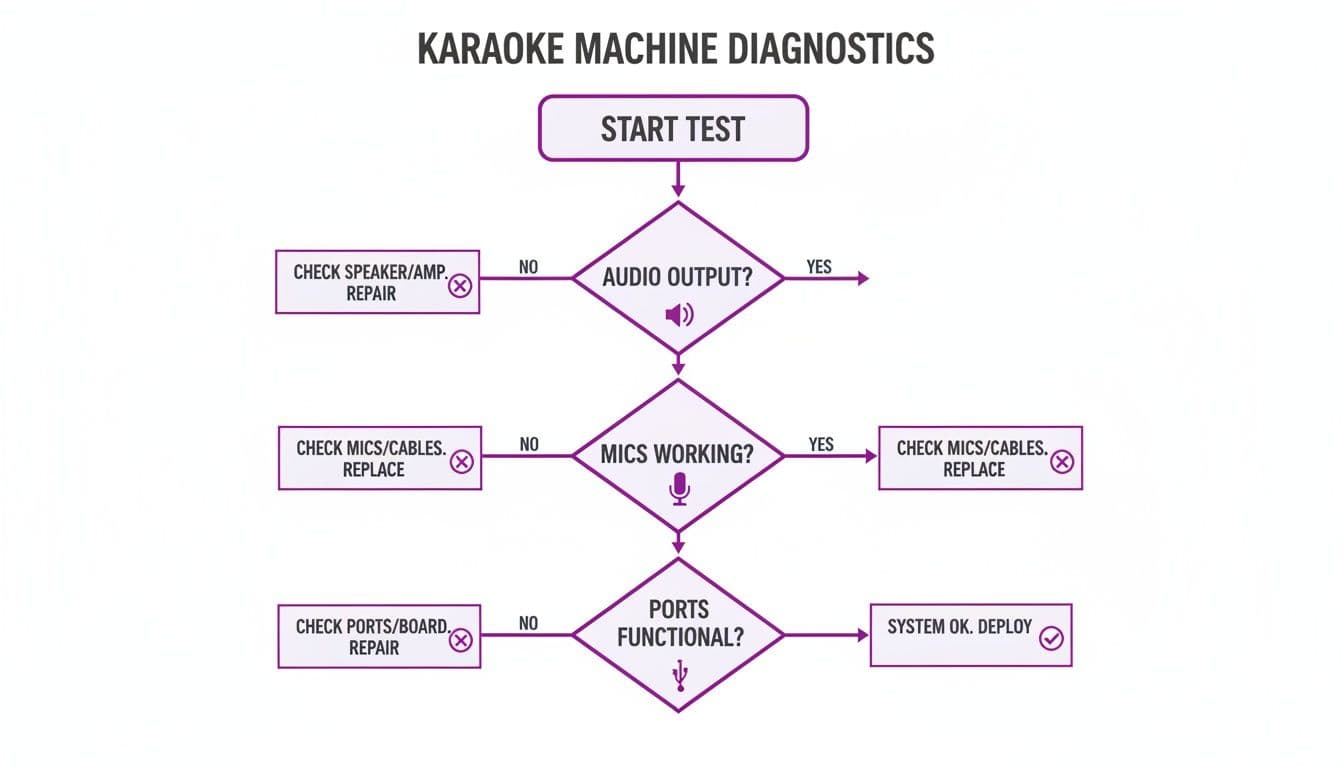
As you can see, it’s all about checking the fundamentals: audio output, microphone functionality, and port connectivity. A quick test of these three areas will tell you if the machine is ready for showtime.
Cost-Benefit Analysis: Buying vs. Renting a Karaoke Machine
To help you decide, let's break down the pros and cons in a more direct comparison. This table lays out the key differences you should think about.
| Factor | Buying | Renting |
|---|---|---|
| Upfront Cost | High initial investment. | Low, one-time fee per event. |
| Long-Term Value | Cost-effective after a few uses. | Becomes very expensive with frequent use. |
| Convenience | Always available for spontaneous use. | Requires booking in advance; subject to availability. |
| Equipment Quality | Varies by budget; pro models are expensive. | Access to high-end, professional-grade equipment. |
| Maintenance | Your responsibility (repairs, updates). | None. The rental company handles everything. |
| Storage | Requires dedicated space in your home. | No storage needed; returned after the event. |
| Setup & Teardown | You handle it every time. | Often included in the rental service. |
Ultimately, buying gives you freedom and long-term value at the cost of maintenance and storage. Renting, on the other hand, offers convenience and access to top-tier equipment, but it's really only practical for infrequent events. Your choice hinges on that classic trade-off: frequency versus convenience.
The Modern Way to Create Karaoke Videos
Searching for a "karaoke machine near me" is a solid plan when you need a physical box for a party. But what if you could ditch the hardware and its limitations altogether? The future of karaoke isn't just a machine you plug in; it's right in your web browser.
This approach completely changes the game. Instead of being stuck with the pre-loaded, often outdated song library that comes with a machine, you get to be the producer. You can take any song you love—from today's biggest hits to that obscure track you can't get out of your head—and turn it into a custom karaoke video on your computer.
Unlocking a New Level of Customization
The real magic of using a browser-based creator is the freedom it gives you. You're not just queuing up a song; you're actually designing the entire visual experience from scratch.
Modern tools often use some pretty smart tech to sync the lyrics to the music automatically, which saves a ton of time. From there, you can really make it your own.
- Visual Style: Pick out fonts, colors, and animations that perfectly match the song's energy.
- Backgrounds: Ditch the generic blue screen. You can upload your own photos or videos to create a backdrop that’s truly unique.
- Timing Control: Need to tweak the sync? It's easy to adjust the timing of every single word or line until it's perfect.
That's a level of control you'll just never get from a standard karaoke machine. It's the perfect solution for YouTubers who want to build a channel, event planners who need a very specific song, or anyone who just wants their karaoke night to be unforgettable. For a detailed walkthrough, check out our guide on how to make a karaoke video.
From Hobby to High-Quality Content
The world of karaoke has come a long way since it first popped up in Japan way back in 1971. The global market, which was valued at USD 874 million in 2024, is on track to hit USD 1,142.03 million by 2032. A huge chunk of that growth is being driven by digital platforms and content creation, not just traditional machines.
This digital shift means anyone can create amazing content. The best part is that modern karaoke video makers are built to be incredibly easy to use.
The workflow is usually dead simple: upload your audio, paste in your lyrics, and start customizing the look and feel in a real-time editor. This straightforward process makes creating videos something anyone can do, no technical skills required. Plus, if you want to make your content even more accessible, you can learn how to transcribe video to text for content to repurpose your lyrics.
By bringing video creation into the browser, you get to skip the bulky hardware, expensive software, and steep learning curve. The power is in your hands to make what you want, when you want, with just a few clicks.
At the end of the day, this modern approach is a powerful alternative to buying or renting a physical machine. It puts the creative tools directly in your hands, letting you build an endless library of personalized karaoke videos ready for any screen, anytime.
Getting Your New Karaoke Machine Home (and Protecting Your Purchase)
You’ve found it—the perfect karaoke machine. You've tested the mics, fiddled with the EQ, and confirmed it has all the right connections for your setup. But before you pull out your wallet, there are a few last-minute details to lock down. Taking a moment here can save you a world of headaches later.
This is also your chance to try a little negotiation, especially if you're buying from a smaller, independent music shop. Unlike big-box stores with rigid pricing, these places often have a bit more wiggle room.
Don't be shy. A simple, polite question like, "Is that the best price you can offer?" can sometimes knock a few bucks off. This works particularly well if you're eyeing a floor model that has a few minor scuffs or scratches from being on display.
Unpacking the Warranty and Return Policy
This is non-negotiable. Seriously. A killer deal on a machine with a terrible (or non-existent) warranty is just an expensive paperweight waiting to happen. You need to know exactly what the store’s policies are before you hand over your cash.
Every shop handles this differently. Some are fantastic, offering a 30-day, no-questions-asked return window. Others might only offer store credit or have a much shorter, 7-day policy. Find out the specifics before a problem pops up.
Key Takeaway: Remember, the store's return policy and the manufacturer's warranty are two different safety nets. The store policy covers you for immediate issues (like getting it home and realizing it won't connect to your TV), while the manufacturer’s warranty handles defects that show up down the line. Get clarity on both.
What happens if a microphone input dies a month from now? Can you bring it back if you discover it’s not compatible with your soundbar? These are the questions you want answers to now. For those building a more robust setup, understanding these components is key—you can dive deeper into what makes up the best professional karaoke equipment in our comprehensive guide.
Final Questions to Ask Before You Pay
To walk out of that store with total confidence, have a few key questions ready. This isn’t about being difficult; it's about being a savvy buyer.
Here's a quick checklist to run through with the salesperson:
- Returns: "What’s your exact return policy on this? Is it a full cash refund or store credit?"
- Warranty: "If something goes wrong under warranty, do I bring it back here, or do I need to ship it to the manufacturer myself?"
- Hidden Fees: "Are there any restocking fees if I return it, especially after I've opened the box?"
- What's Included: "Just to be sure, does this price include all the accessories we used in the demo—the cables, microphones, and remote?"
Getting straight answers to these questions means no unpleasant surprises later. Once you have all the info, you can finally make the purchase, knowing you’ve made a smart, protected investment in countless future singalongs.
Got Questions About Finding a Karaoke Machine?
Even when you know what you're looking for, diving into the world of karaoke machines can stir up a few questions. It's easy to get a bit lost in the different models, price tags, and features. Let's tackle some of the most common things people wonder about so you can feel totally confident when you're ready to buy.
First up, what's this going to cost me? Prices are all over the map, from a $50** toy at a big-box store to a serious pro setup that can run you **$1,000 or more at an audio specialty shop.
For a solid, all-in-one machine that will keep your parties going, a good budget is somewhere between $150 and $400. This sweet spot usually gets you a reliable system with decent speakers, a pair of wireless mics, Bluetooth, and maybe a few fun vocal effects. If you dip too far below that, you might be sacrificing sound quality. Anything much higher, and you're starting to get into gear for true audiophiles.
Home vs. Professional Systems
People often get hung up on the difference between a "home" machine and a "professional" one. It's actually pretty straightforward and boils down to how the pieces fit together.
A home karaoke machine is an all-in-one deal. The speakers, mixer, and inputs are all packed into one portable box. They’re designed for pure plug-and-play fun.
A professional system is modular, meaning you buy each part separately. Think of it like building a custom PC. You'd be picking out:
- PA Speakers for that big, concert-like sound.
- A Mixer to fine-tune every audio source and add effects.
- High-quality microphones for crisp, clear vocals.
- A media source, like a laptop running specialized karaoke software.
The trade-off is simple: a pro setup gives you incredible sound quality and control, while a home system gives you convenience and affordability. For the vast majority of us just looking to have a blast at home, an all-in-one machine is the perfect choice.
What About the Songs?
This is a big one: "Do the machines actually come with songs?" The short answer is yes, but it's not what you think. Most will include a demo disc (remember CD-Gs?) with a handful of generic tracks to get you started.
The real magic is in the machine’s connectivity. Modern karaoke systems are built to play music from your devices. You’ll be using Bluetooth to stream from YouTube or a karaoke app, or plugging in a USB drive loaded with MP3+G files.
My advice? Don't get too focused on the built-in song list. Instead, check how easily it connects to your phone or laptop. That’s what gives you an endless library and keeps the party fresh every single time.
Ready to skip the hardware and create stunning, custom karaoke videos right from your computer? With MyKaraoke Video, you can turn any song into a high-quality karaoke track with perfectly synced lyrics in just minutes. Explore the future of karaoke content creation at https://www.mykaraoke.video.
