You've finished the video, watched the final render export cleanly, and now the main question hits. How do you get people to watch it instead of letting it sit on a channel nobody finds? That's the pressure point in promotion music video campaigns, because the upload itself is only the starting line. The strongest releases are built like campaigns, with teaser assets, platform-native clips, paid momentum, and editorial outreach working together instead of relying on a single post. A 2025 market report valued the global music promotion services market at $3.8 billion, with online platform services accounting for 87.3% of the market, which shows how decisively promotion has moved digital-first (music promotion services market report). Another industry datapoint cited for 2024 says promoted music videos got 340% more views in their first month than non-promoted content, which is exactly why launch strategy matters so much for early velocity (music video promotion analysis). If you want a practical breakdown of YouTube-specific music promotion tactics, music promotion on YouTube is a useful companion read.
1. MyKaraoke Video
MyKaraoke Video is the right choice when your first job is to give the track a second life as a lyric video, karaoke cut, teaser, or social asset. In a promotion music video workflow, that matters because most campaigns need more than one export. You need something clean enough to share on a channel, light enough to post as a teaser, and fast enough to ship before the release window closes.
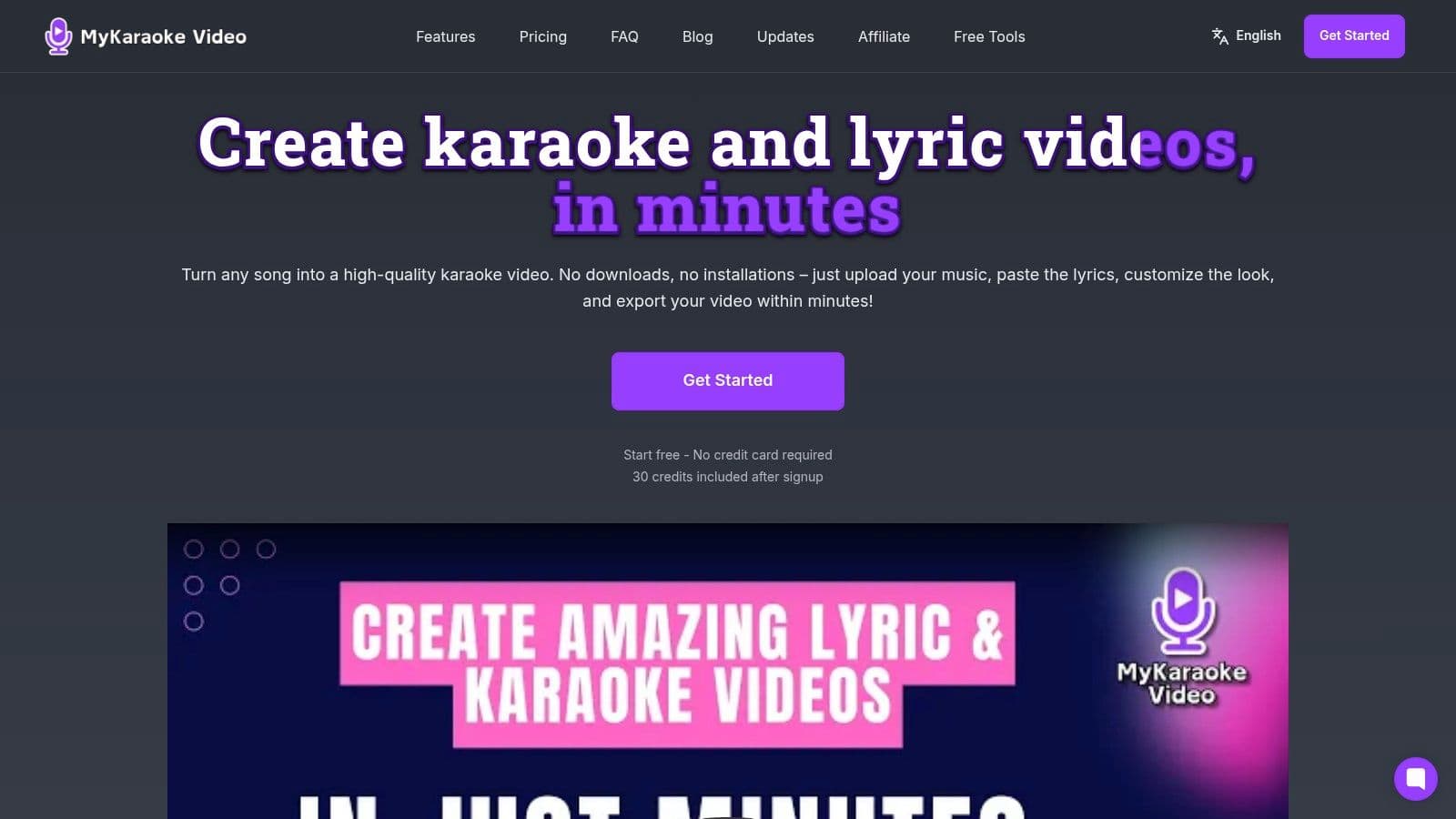
The browser-first workflow is the main advantage. You can upload audio, add or auto-transcribe lyrics, let the AI remove vocals and sync lines, then use the Sync Editor when a chorus needs a tighter lock. That mix of automation and manual control is what makes it practical for marketers, because you can move fast without giving up polish.
Why it fits promotion workflows
A lot of teams waste time bouncing between software just to make one asset. MyKaraoke Video keeps that in one place, in the browser, with real-time previews and server-side rendering. That means your device stays free while exports queue, which is helpful when you're building multiple cutdowns for a launch.
- Fast output: Professional-looking 1080p MP4 karaoke and lyric videos in minutes.
- Flexible editing: Fonts, colors, outlines, backgrounds, visualizers, animations, and duet modes.
- Budget control: Free signup credits, pay-as-you-go credits, or subscriptions with better value for repeat use.
- Practical for repurposing: One song can become a lyric video, a teaser, and short-form clips without rebuilding the project from scratch.
Practical rule: Use MyKaraoke Video for assets that need to ship fast, then reserve heavier editing for the one hero video that needs bespoke polish.
The trade-off is simple. AI sync is fast, but it still deserves a manual check when timing has to be exact. For creators who care about speed, consistency, and recurring output, that's a fair trade. Visit the MyKaraoke Video website if you need a browser-based way to turn one song into multiple promotion assets.
2. HIP Video Promo
HIP Video Promo fits campaigns that need credibility before volume. It serves artists who want editorial-style placement in places audiences already trust, including major TV programmers, OTT channels, blogs, and online outlets. For a promotion music video campaign, that difference matters because some releases need third-party validation more than they need another paid placement.
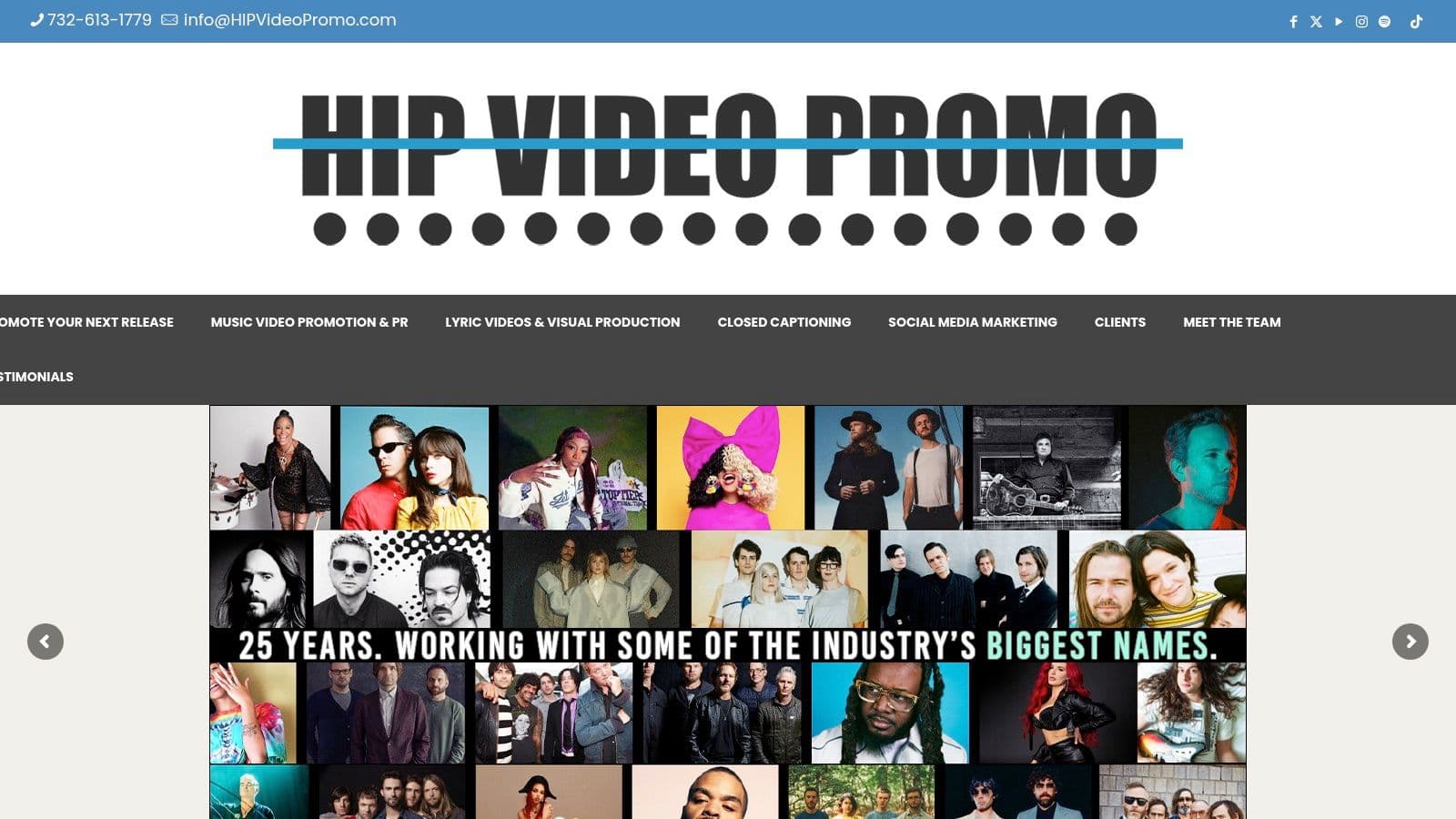
The value is in how the pitch travels. A paid ad can drive views, but a placement in front of curators or programmers can give the video the kind of outside approval that helps it move past your own followers. That matters for label-level campaigns, artist launches with a press angle, or videos meant to feel like part of a broader cultural moment.
Where it earns its keep
HIP Video Promo is not the lowest-cost route, and that choice reflects the service model. You are paying for hands-on outreach, relationship-based pitching, and campaign coordination that would take significant time to handle on your own. It fits better when your budget supports a more selective approach and when the video is strong enough to stand up to editorial review.
- Best for: Artists who need TV, OTT, and online editorial exposure.
- Not ideal for: Quick experiments or ultra-lean self-serve testing.
- Main trade-off: Stronger credibility, less transparency on pricing.
The practical question is fit. If the release has a clear visual identity and you want programmers to consider it seriously, this kind of service can open doors that ad platforms usually do not. Start at HIP Video Promo if the campaign depends on editorial placement and professional pitching.
3. Rive Video Promotion
Rive Video Promotion sits in the middle ground between pure ad buying and old-school publicity. It's useful when you want a broader footprint that reaches TV, OTT, blogs, curated YouTube channels, and even retail or DJ pools. That makes it a strategic option for promotion music video campaigns that need more than one distribution lane.
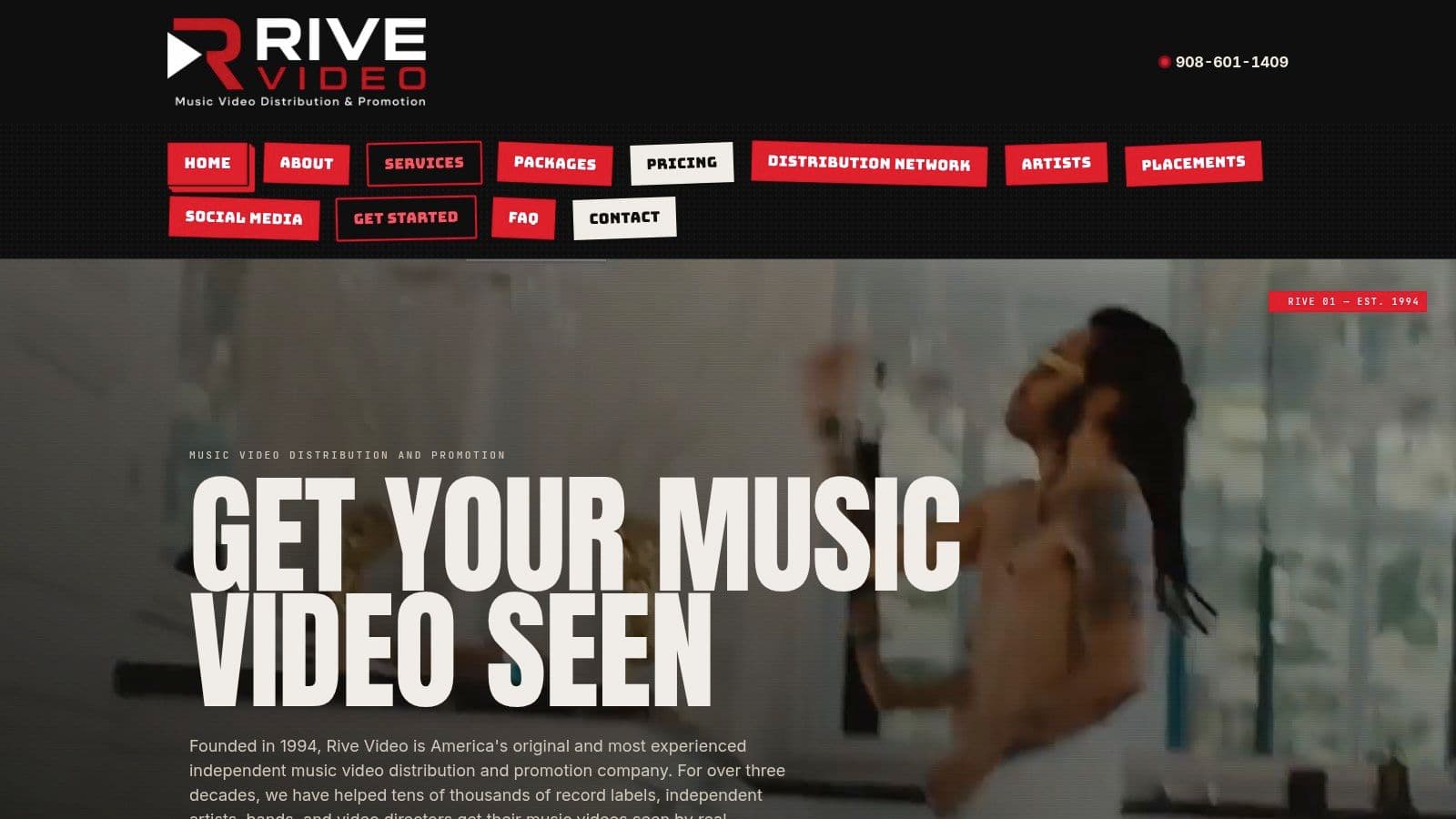
The appeal is breadth. Some artists want one company to handle pitching, press blasts, and distribution-style outreach without forcing them to coordinate multiple vendors. Rive's model is built around that kind of hands-on service, which can be a real advantage if you're juggling a release calendar and don't want the campaign to fragment across too many tools.
Good for multi-channel reach
This approach works best when the video has enough genre fit to matter across different gatekeepers. A polished visual can do well with a TV outlet, but the same asset also has to make sense for YouTube curators, press contacts, and channel programmers. That means the edit, metadata, and press framing all need to be aligned before outreach starts.
One caution is that editorial gatekeepers still decide what gets picked up. If the video doesn't fit the outlet, no amount of outreach changes that. So this is not a volume play. It's a positioning play.
Not every view source is equal. A smaller placement from a curator who matches your genre can outperform a bigger placement that lands in the wrong audience.
Use Rive Video Promotion when your release needs coordinated outreach across TV-style, digital, and niche video channels, and when you're comfortable with a service model that depends on editorial judgment.
4. VM Agency
A music video can look finished and still be hard to promote if you do not know what the ad spend is buying. VM Agency, also known as View Maniac, fits artists who want transparent YouTube ad promotion without bringing in a full-service team. I would use it for the artist who wants to test a video, see the cost structure clearly, and avoid vague promises that are hard to verify. That matters in promotion music video work because ad testing only works when the budget, targeting, and expected delivery are easy to read.
The value is the way the service frames the campaign before spending starts. Published packages and expected view ranges make planning easier, and the ad-eligibility guidance helps cut down on avoidable rejections. That matters because many music videos do not get stuck on the song itself. They run into problems with the upload, thumbnail, or content setup, which makes approval harder than it should be.
Why transparency matters
A platform that shows the rough output of a package changes the job from guesswork to planning. You can compare campaigns side by side, test different edits, and choose between worldwide distribution or a location-targeted push. Location targeting can help when your audience is concentrated in one region, but it usually costs more, so it needs a clear purpose rather than being treated as a default option.
The service also fits artists who want to make practical decisions before spending. If you know the video is built for ad traffic, you can shape the edit, thumbnail, and targeting around that goal instead of hoping for broad editorial pickup. That is a different strategy from press outreach, and it should be treated that way.
- Best for: Straightforward YouTube ad campaigns with clear budgets.
- Helpful for: Teams that want approval guidance before spending.
- Main limitation: Delivery is not editorial placement.
This is an ad tool, not a press engine. That is fine if your main goal is controlled reach and performance you can measure. Use VM Agency if you want a cleaner way to run a YouTube music video ad push with fewer surprises.
5. Indie Music Academy
Indie Music Academy fits artists who want a managed YouTube campaign through Google Ads, but do not want to spend their own time inside the dashboard. That matters because campaign quality often gets lost in execution friction. A solid plan is useless if the artist never ships it, or ships it too late to matter.
How to promote music on YouTube
For artists comparing promotion music video options, this sits in a different lane from press outreach or TV placement. It is a service built around controlled ad traffic, reporting, and campaign oversight, so the question is less about hype and more about whether you want a clean paid path with visible inputs. That makes it a practical choice for releases where channel health and account trust matter more than chasing a quick burst.
Managed ads with an education layer
The trade-off is straightforward. You are not buying editorial pickup first, you are buying managed ad execution and optimization. For some artists, that is the better use of budget because you can connect spend to viewer behavior, then adjust the creative or targeting before the campaign runs too long in the wrong direction.
The education side also changes how useful the service is over time. If you want to understand why one cut holds attention and another falls flat, that context helps you make sharper decisions on the next release. I find that especially useful for artists who want to keep some control without building the campaign from scratch every time.
- Good fit: Artists who want managed YouTube ads with fewer moving parts.
- Watchout: TV placement or blog coverage belongs in a different lane.
- Best use case: A credible YouTube growth push with reporting and hands-on guidance.
If you want a managed route into YouTube ads without handling every setting yourself, visit Indie Music Academy.
6. Prodvigate
Prodvigate fits artists who want to test small and move fast. In promotion music video work, that matters when you are still deciding whether the thumbnail, hook, or audience target deserves a larger budget. It gives you a practical way to learn before you commit too much money, which is often the difference between a useful test and an expensive guess.
The strength is in the workflow. Campaign setup, optimization controls, and live monitoring show what is happening without forcing you to read between the lines, and that matters more than polished branding if your goal is a quick YouTube test. For artists comparing tactics, the right question is whether you need a controlled ad run now or a broader outreach push later, which is the same decision frame discussed in this guide to promoting a music video.
Good for experiments, not everything
Prodvigate is narrow by design. It focuses on YouTube ad distribution, not editorial pitching or press, so it works well if you want to see how the video performs inside the platform's ad system. It is a weaker fit if your plan depends on publicist outreach or curator-led placement.
The process stays simple. You choose a creative, watch the results, and decide whether the campaign deserves more budget. That approach works best when you want discipline instead of speculation, because each decision is tied to real viewer behavior rather than hope.
Small-budget tests work best when the goal is learning, not vanity. If the early data looks weak, the smarter move is usually to fix the creative before you spend more.
Use Prodvigate when you want a low-friction way to test YouTube promotion and keep the campaign inside Google's ad ecosystem.
7. SubmitHub
SubmitHub fits artists who want curator reach without building a full PR operation around the release. It does not promise views, and that limitation is part of its value. In promotion music video campaigns, the work is often finding the channels, blogs, playlists, and tastemakers who can make their own call on whether the video belongs, and SubmitHub gives you a structured way to make those pitches.
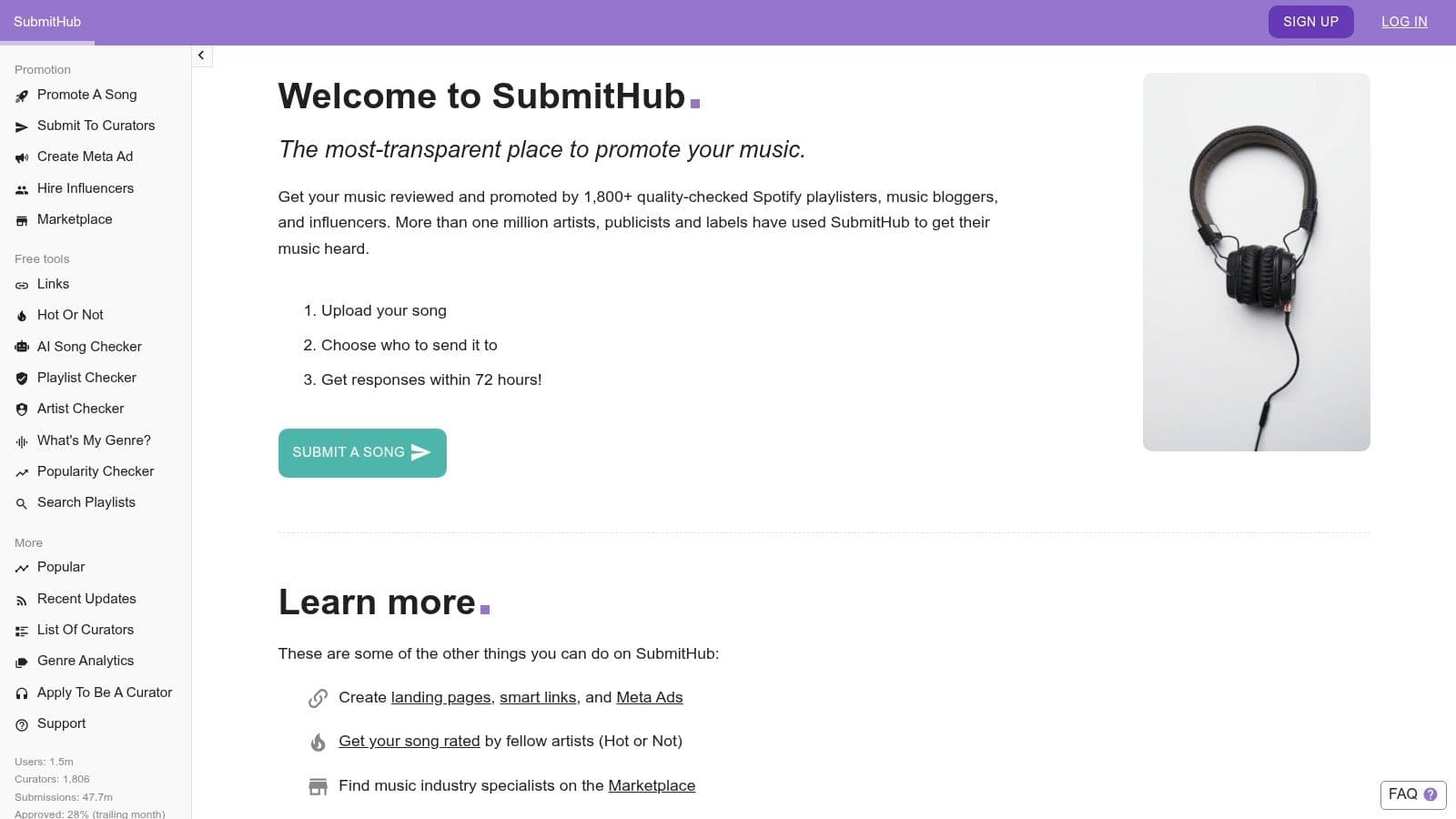
The practical advantage is range with some control. You can submit to YouTube channels, blogs, playlisters, radio, and influencers, then use curator feedback and platform stats to decide where the next round of outreach should go. That makes it a better fit for artists who want to refine their targeting over time instead of sending the same pitch everywhere.
A useful way to judge SubmitHub is by the quality of your release package. The thumbnail, title, description, and pitch all need to be clear, because curators usually respond to fit and presentation before they respond to enthusiasm. If you are still shaping your broader rollout, a planning resource like music promotion strategies for video releases can help you decide what assets to prepare before you start sending.
Where it works best
SubmitHub is strongest when the music video already has a defined audience or lane. A sharp genre fit, a focused pitch, and a clean visual package matter more than trying to reach everyone at once. That approach helps you avoid wasting credits on curators who were never likely to connect with the release.
The Premium path matters because it sets clearer expectations around response timing and feedback. The trade-off is still real. Acceptance depends on genre, quality, and curator preference, and no submission platform can force a placement.
- Best for: Curator outreach and niche discovery.
- Useful for: Artists who want feedback, not just exposure.
- Main limitation: Placements are discretionary, not guaranteed.
If your campaign depends on direct outreach to curators and YouTube tastemakers, SubmitHub is a practical place to start.
Music Video Promo: 7-Platform Comparison
| Service | Implementation Complexity 🔄 | Resource Requirements ⚡ | Expected Outcomes 📊⭐ | Ideal Use Cases 💡 | Key Advantages ⭐ |
|---|---|---|---|---|---|
| MyKaraoke Video | Low, browser-first, 1‑click workflow; occasional manual sync tweaks | Low–Moderate, free credits or pay-as-you-go / $7.99–$14.99/mo subs; server-rendered exports | High, fast 1080p karaoke/lyric videos; instant or queued exports; watermark on free | Artists/creators needing quick, polished karaoke/lyric videos and channel content | AI automation + deep customization; real-time preview; cost-flexible |
| HIP Video Promo | High, agency-led, strategic pitching and coordination | High, custom-quoted campaigns; larger budgets usually needed | Variable, potential TV/OTT/editorial placements; editorial gatekeepers determine pickup | Labels or artists seeking professional TV/OTT and editorial exposure beyond ads | Established relationships with major outlets; strong credibility |
| Rive Video Promotion | High, hands-on scoping and multi-outlet distribution | High, pricing on request; agency-managed resources | Variable, TV/OTT, retail/DJ pools, curated YouTube placements; PR add-ons possible | Artists wanting broad distribution (TV, retail, YouTube curators) and PR support | Broad footprint across TV, OTT, retail and curated channels; clear deliverables |
| VM Agency (View Maniac) | Medium, managed Google/YouTube Ads campaigns with packages | Medium, published view-range packages; additional geo targeting costs | Predictable, ad-driven view delivery; not an editorial placement guarantee | Those who want transparent, ad-based YouTube promotion with budgeting clarity | Transparent pricing, certified Google Ads managers, ad-eligibility guidance |
| Indie Music Academy | Medium, white-glove campaign management + coaching | Medium–High, custom pricing; managed service overhead | Good, TOS-compliant human traffic focus and reporting; channel growth emphasis | Independent artists seeking managed, compliant YouTube ad campaigns and coaching | Emphasis on real human traffic, compliance, and education/coaching |
| Prodvigate | Low, self-serve platform with built-in campaign tools | Low, low entry budgets (from ~$20); dashboard monitoring | Fast, quick tests and ad-driven views with real-time reporting | DIY artists testing creatives/audiences and running small YouTube ad tests | Fast setup, low minimums, Google Partner status and live dashboards |
| SubmitHub | Low–Medium, structured submission process to curators | Low, credit-based submissions; pay-per-submission model | Variable, possible curator placements and feedback; acceptance not guaranteed | Artists seeking curated YouTube/blog placements and curator feedback | Large vetted curator network, structured feedback and analytics |
Building Your Promotion Music Video Mix
There isn't one winning formula for promotion music video campaigns, because different tools solve different problems. MyKaraoke Video helps you create more assets from one song, which is useful when you need lyric videos, teasers, and fast repurposing. HIP Video Promo and Rive Video Promotion are better when you want editorial weight, TV-style credibility, and campaign support that reaches beyond your own channels. VM Agency, Indie Music Academy, and Prodvigate are stronger if your plan is centered on YouTube ads, especially when you want transparency, management, or small-budget testing. SubmitHub fits the outreach lane, where curator fit matters more than raw spend.
The smartest releases usually combine at least two of those approaches. A creator might use MyKaraoke Video to build teaser assets, run a controlled YouTube ad test through Prodvigate or VM Agency, then pitch curators through SubmitHub once the video has some traction. That mix makes sense because the market is already digital-first, and the strongest campaigns use platform-native content, not a single upload and a hope for the best. The data points earlier show why this matters, promoted releases can get much stronger early momentum, while the broader promotion market continues to grow as digital channels take more of the load (music promotion services market report, music video promotion analysis).
The practical move is to match the tool to the job. If you need speed, use a self-serve or browser-based workflow. If you need credibility, invest in editorial outreach. If you need learning, test small and read the data. The win is not chasing every platform at once, it's building a release system you can repeat on the next video without starting from zero.
If you're building a music video release and want a fast way to turn one track into a polished lyric video, teaser, or karaoke asset, start with MyKaraoke Video. It's built for creators who need speed, control, and export-ready visuals that fit real promotion music video campaigns. Visit the site, make your first cut, and turn the next release into more than just an upload.
