You're probably looking at karaoke through two lenses at once. One lens is fun: packed rooms, big choruses, birthdays, regulars who bring friends. The other lens is harder: leases, licensing, sound bleed, equipment failures, and the question every owner has to answer before opening night, which is whether this idea works as a business or just sounds good after midnight.
That second lens matters more than most first-time operators think. Starting a karaoke business isn't just about putting a mic in a room and loading a song catalog. It's about building a repeatable entertainment product people choose over other ways to spend a night out. If the room feels awkward, the wait list is messy, the sound is harsh, or the songbook feels stale, customers notice fast.
The strongest karaoke businesses I've seen are built like hospitality brands. They know who they serve, how the room should feel, what the tech stack can handle on a busy Saturday, and where compliance risks live. They treat song selection, guest flow, and reliability as operating disciplines, not afterthoughts.
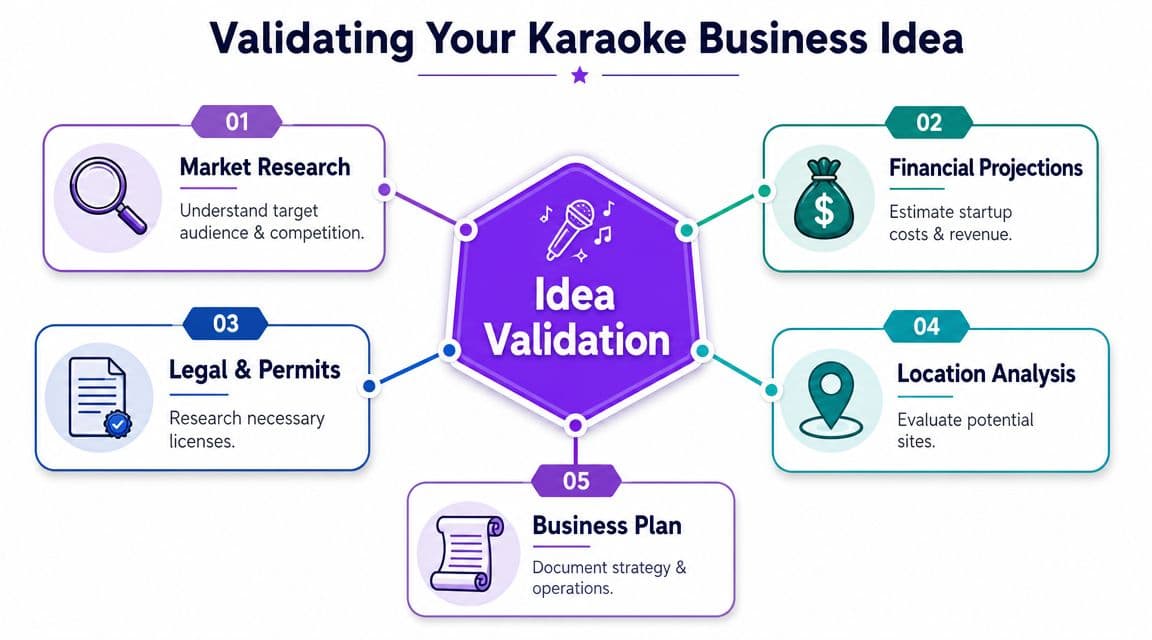
Validating Your Karaoke Business Idea
Karaoke can support real revenue, but only when the market supports it. A 2026 business guide reports that karaoke businesses in the United States generate $250,000 to $500,000 in average annual revenue, and it also says operators should evaluate population density, nightlife trends, and customer preferences before opening because the format depends on repeat visits and local demand (Bookeo's 2026 karaoke business guide).
That point gets overlooked. Karaoke is not a generic nightlife add-on. It performs differently depending on whether your local market already supports late-night entertainment, group outings, birthday traffic, and repeat social habits. A venue in a district with active evening foot traffic solves different problems than a suburban concept built around reservations and private events.
Three business models and who they fit
Most operators fall into one of three models.
Dedicated karaoke venue. This is the full concept. It may be a main-stage bar, a private-room venue, or a hybrid. It gives you the most control over branding, scheduling, guest flow, and food and beverage strategy. It also gives you the most exposure to fixed costs and compliance.
Mobile KJ service. This works for private parties, corporate events, and venue partnerships. It's often a lower-complexity way to test demand, build a brand, and learn what songs and formats people want. It doesn't give you the same control over environment, and your reputation depends heavily on portability, setup speed, and reliability in unfamiliar rooms.
Karaoke inside an existing bar. This is the least disruptive way to enter the category if you already operate a venue. It can turn a slow night into a programmed night. It can also fail if the room was never designed for queue management, lyric visibility, or audience energy.
What to verify before you spend money
Don't validate with opinions. Validate with observation.
- Study the room, not just the concept. Visit local karaoke nights and watch how long people stay, whether they sing in groups or solo, and whether the energy collapses between singers.
- Map customer intent. A private-room audience wants control and privacy. A main-stage audience wants momentum, crowd participation, and a host who can keep the room moving.
- Check neighborhood fit. Dense nightlife areas support impulse visits. Destination areas need stronger booking behavior and clearer reasons to choose you.
- Audit competitors for gaps. Look for weak song catalogs, dated interfaces, bad acoustics, poor wait management, or no real brand identity.
- Ask what brings people back. Repeat business usually comes from a consistent experience, not novelty alone.
Practical rule: If your concept only works on weekends, your idea isn't validated yet. You need a plan for off-peak nights, private bookings, or another reliable use case.
A lot of bad launches come from copying the surface of a successful karaoke venue without copying the economics beneath it. A neon sign, a stage, and a few wireless mics don't create demand. A clear audience fit does.
Crafting the Business Plan and Securing Funds
The financial realities of starting a karaoke business often determine if a concept becomes a real business or an expensive hobby. Starting from scratch can require $175,000 to $850,000 in startup funding, while converting an existing bar may cost $25,000 to $40,000. The same industry guide says equipment plus software can add $5,000 to $15,000 annually, and permits and licenses average $3,000 to $5,000 (TicketingHub's karaoke startup cost guide). Those numbers tell you something important right away. Capital structure is not a side issue in this business.
If you're starting a karaoke business, your business plan has to do more than summarize the dream. It needs to explain how the room makes money on ordinary nights, what demand pattern supports the fixed cost base, and how long you can operate before the venue settles into stable traffic.
Build your plan around operating reality
A usable plan answers practical questions lenders, investors, and partners will ask.
| Cost Category | Estimated Cost (Low-End) | Estimated Cost (High-End) | Notes |
|---|---|---|---|
| Launch from scratch | $175,000 | $850,000 | Full venue startup range from industry guide |
| Convert an existing bar | $25,000 | $40,000 | Lower-cost path when infrastructure already exists |
| Equipment and software per year | $5,000 | $15,000 | Ongoing tech and system costs for a basic setup |
| Permits and licenses | $3,000 | $5,000 | Local approvals and operating compliance |
What that table doesn't show is just as important. You still need to model staffing, inventory, maintenance, marketing, repairs, cleaning, and opening-period cash burn in your own market. If you can't describe those costs clearly, you're not ready to ask anyone for money.
What lenders and investors want to see
They don't want enthusiasm. They want logic.
- A clear format choice. Main-stage bar, private-room venue, hybrid, or hosted nights in an existing bar.
- A location thesis. Why this neighborhood, this traffic pattern, and this customer segment.
- A revenue mix. Food and beverage, room bookings, hosted events, corporate nights, birthdays, and other recurring uses.
- A capital plan. What gets funded up front, what gets leased, and what cash reserve protects you after opening.
- An operations plan. Who runs the floor, the queue, the sound system, and guest recovery when something goes wrong.
Cash problems usually start before the doors open. Owners spend heavily on visible items and leave too little room for opening-period mistakes, rework, and slow midweek demand.
A simple projection method that actually helps
Don't start by guessing annual revenue and working backward. Start with weekly capacity.
Estimate how many usable nights you have. Then define what each night is supposed to be: open-stage, private-room bookings, corporate rentals, themed nights, or mixed service. Then pressure-test each night against how the room functions. Can guests order easily while waiting to sing? Can the system keep the queue moving? Can the staff reset rooms without killing turnover?
A good projection isn't optimistic. It's operational. It reflects what your team can deliver consistently.
Navigating Karaoke Licensing and Copyright Law
Operators get casual when they should get disciplined. Karaoke licensing feels complicated because people mix different rights together. The cleaner way to handle it is to separate the issue into public performance and track usage.
Public performance is about playing music in a commercial setting. Track usage is about whether the karaoke version you're using was properly licensed for the way you're using it. Those aren't the same problem, and fixing one doesn't automatically fix the other.
The two buckets that matter
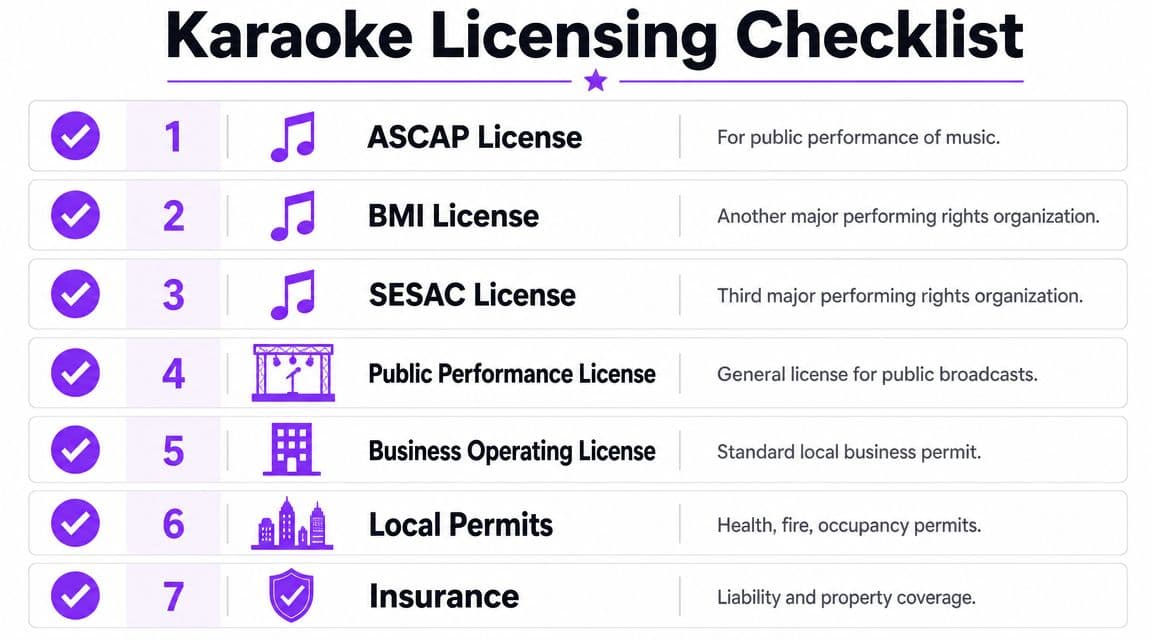
Performance rights. If music is being performed publicly in your venue, you need to address licensing with performing rights organizations such as ASCAP, BMI, and SESAC. For most venue operators, this is a standard compliance issue, not an optional extra.
Karaoke track rights. This is the part many people misunderstand. A karaoke file, lyric video, vocal-free track, or downloaded backing track may come with its own use restrictions. You need to know what rights you received and whether commercial venue use is covered. If you're evaluating how operators handle song acquisition workflows, this guide on downloading songs for karaoke is useful background for understanding the practical side of building a usable library.
What gets businesses into trouble
Most legal problems don't come from a complex scheme. They come from sloppy habits.
- Mixing personal and commercial use. A file that works fine at home may not be cleared for commercial venue use.
- Assuming software covers everything. A platform subscription may help with playback or content management, but it doesn't automatically replace venue-level music compliance.
- Failing to document purchases and permissions. If you can't show where your tracks came from and what rights came with them, you're exposed.
- Ignoring local operating permits. Music rights are only part of the picture. Business licensing, occupancy rules, health permits, fire compliance, and insurance still apply.
A compliant karaoke business keeps records. If your catalog, invoices, subscriptions, and permit paperwork are scattered across old emails and random laptops, fix that before opening.
A practical compliance workflow
Start with a licensing folder and treat it like a core operating system. Keep contracts, invoices, permit renewals, insurance records, and any documentation tied to track sourcing in one place. Then assign one person to own compliance deadlines.
If you operate multiple rooms or a hybrid model, document how content is delivered in each environment. A main-stage setup, private-room playback system, and hosted event model can create different administrative needs. That doesn't mean the law changes by vibe. It means your procedures have to match the way your business operates.
Choosing Your Equipment and Building a Modern Songbook
Your guests will forgive a nervous singer. They won't forgive dead air, feedback, unreadable lyrics, or a host station that freezes when the room is full. Equipment choices shape trust, and trust is part of the product.
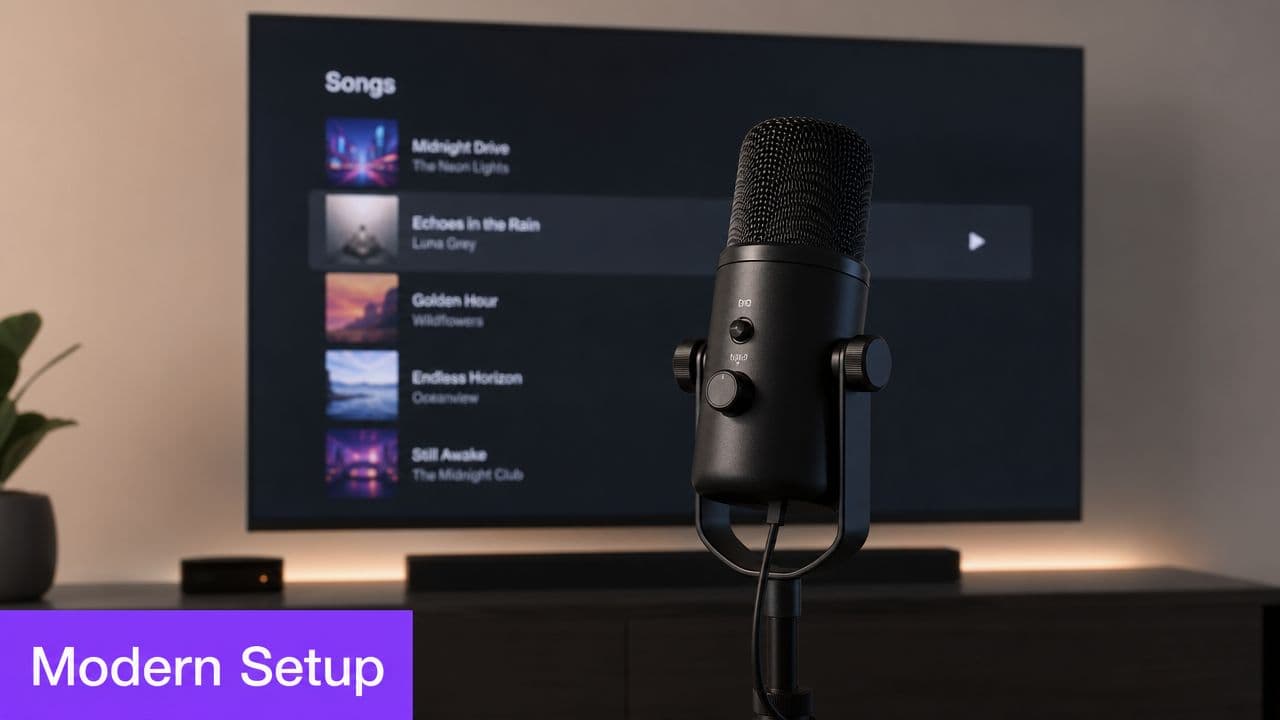
The old model was hardware-heavy. Dedicated karaoke machines, physical media, closed song catalogs, and awkward upgrade paths. That setup can still work in narrow use cases, but it often creates friction when you need flexibility, speed, and cleaner content management.
Traditional hardware versus modern software
Traditional hardware systems are familiar to some operators because they feel self-contained. The downside is that they can be rigid. Expanding the library, changing room formats, or updating visuals often becomes more cumbersome than expected.
Software-based systems give you more control over search, display, queue management, and content updates. They also fit better with multi-screen environments, private-room workflows, and modern file management. If you're comparing setup approaches, this breakdown of professional karaoke equipment options helps frame the trade-offs between the visible gear and the less obvious system decisions behind it.
Buy for failure resistance, not showroom appeal
Here's what matters on a busy night:
- Microphones that can survive drops and constant turnover
- Speakers sized for intelligibility, not just volume
- Displays guests can read from where they're seated
- Mixers and playback systems your staff can troubleshoot fast
- Redundant cables, batteries, adapters, and signal paths
A bad purchase usually shows up under pressure. The system works during setup, then fails when multiple singers rotate quickly, staff members switch stations, or someone changes inputs without understanding the signal chain.
Don't build your tech stack around what sounds impressive in a demo. Build it around what your least technical shift lead can recover when something breaks at peak volume.
Your songbook is a brand asset
Generic catalogs create generic venues. If your library looks like every other room in town, you've given away one of the easiest ways to differentiate.
That's why modern operators increasingly treat the songbook as a curated experience. They add local favorites, niche genres, multilingual selections, event-specific sets, and content that fits their room identity. Browser-based tools like MyKaraoke Video let operators create karaoke or lyric videos from songs and lyrics, with features such as automatic lyric syncing, a sync editor, and export to modern video formats. That's useful when you want a cleaner custom library without relying only on clunky legacy workflows.
This short walkthrough shows the kind of workflow modern teams are moving toward:
A strong songbook does two jobs at once. It improves the guest experience tonight, and it gives people a reason to choose your venue again next month.
Designing the Ultimate Venue and Guest Experience
Two groups walk into karaoke venues for completely different reasons. One group wants the room to see them. The other wants the room to disappear around them.
That's the cleanest way to think about main-stage versus private-room design.
Two room stories that produce different businesses
In a main-stage venue, the room runs on social momentum. A singer gets applause from strangers, a birthday group orders another round while waiting for their turn, and the host keeps enough pace that dead time never settles over the room. In that format, sightlines matter. So does the relationship between stage, bar, queue area, and seating. If guests can't follow what's happening, energy leaks fast.
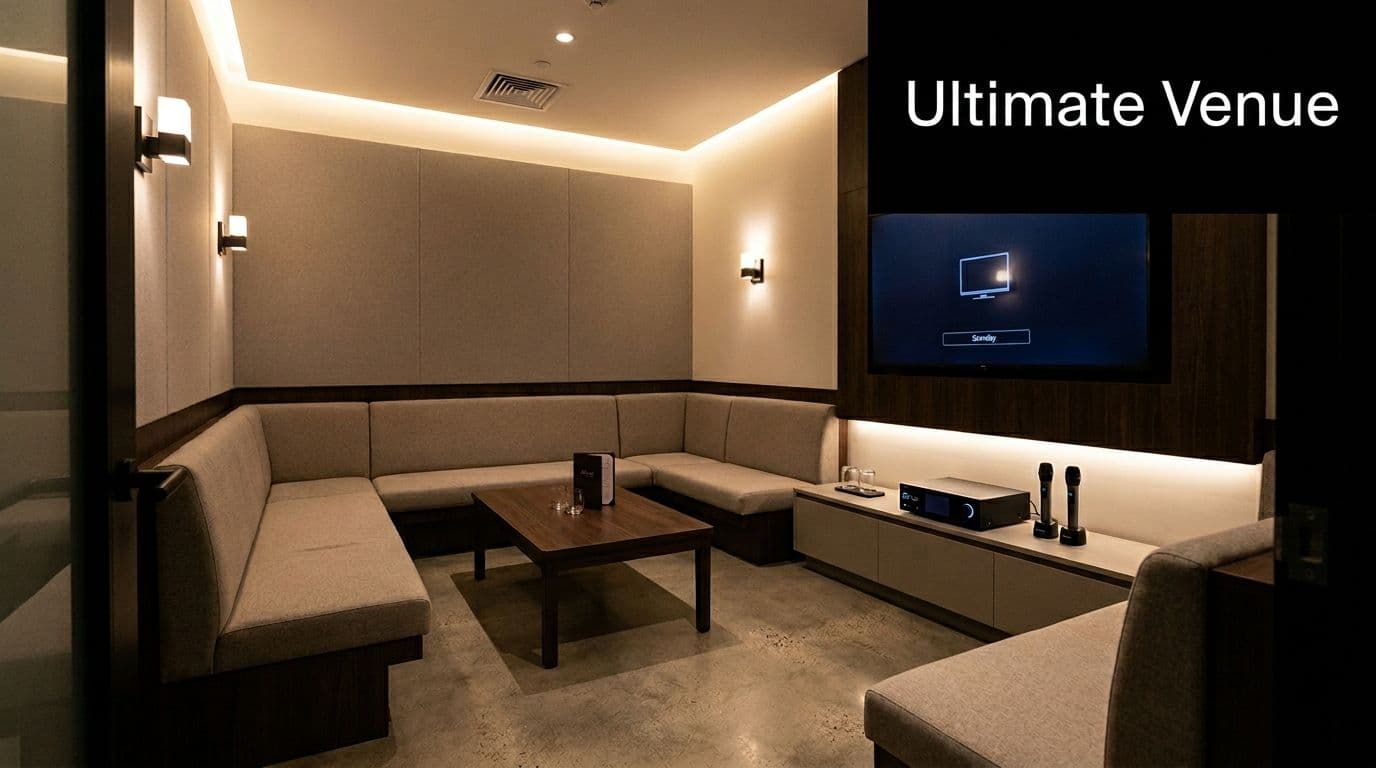
In a private-room model, the value is control. Guests choose their own pace, their own songs, and their own social circle. They care less about public performance and more about comfort, privacy, easy controls, and whether the room feels worth the booking.
Design choices that affect spending and repeat visits
The wrong layout makes guests work too hard. The right layout removes friction.
- Seating arrangement. In main-stage rooms, people need clear views of lyrics and performers. In private rooms, seating should support group participation, not force half the room to twist toward one screen.
- Lighting. Guests need atmosphere, but they also need to read, order, and move around safely.
- Acoustics. Harsh reflections make average singers sound worse. Softening the room can improve confidence and audience tolerance.
- Song selection flow. If browsing is confusing, guests disengage before they sing.
- Service pattern. Food and drink service should support the entertainment, not interrupt it.
A lot of owners overinvest in decor and underinvest in workflow. Staff should be able to explain the system quickly, recover awkward moments, manage room resets, and solve minor tech issues without escalating every problem.
The guest experience starts before the first song. It begins when people enter, figure out where to go, and decide whether the room feels easy or stressful.
If you want a sustainable brand, design for comfort, confidence, and speed. The theatrics matter. The operating flow matters more.
Marketing Your Business for a Packed House
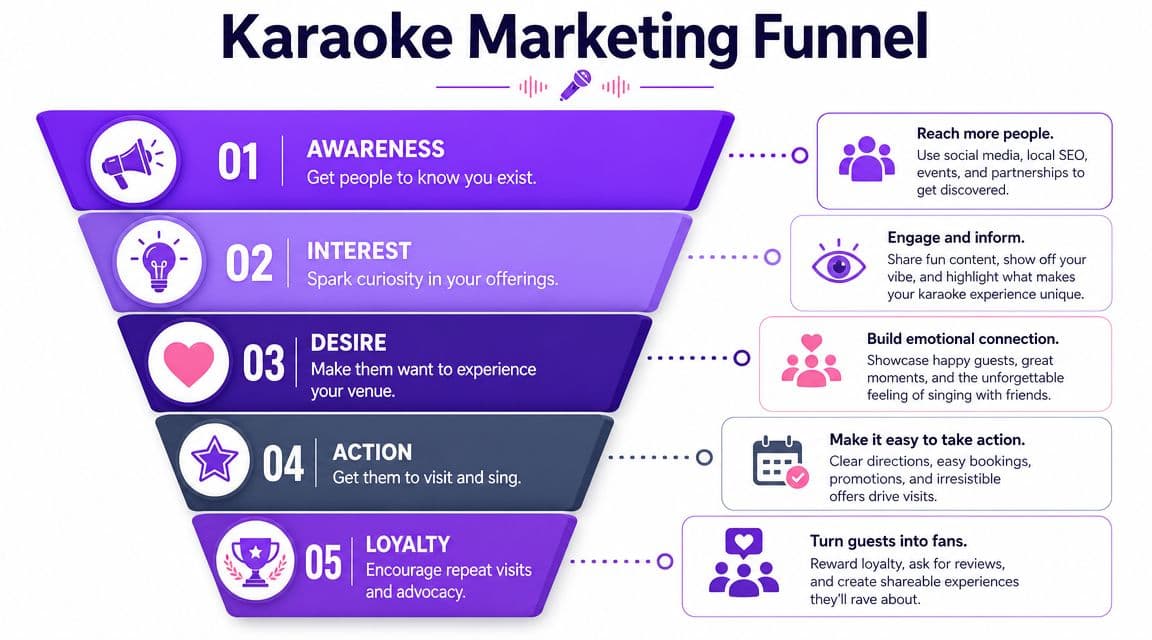
The strongest karaoke marketing doesn't sell singing. It sells belonging.
Discounts can fill a room once. Community fills it again next week. That's why I push operators to stop thinking like promoters and start thinking like hosts. You're not only advertising a venue. You're building a scene people want to be part of.
Community beats one-off promotion
Themed nights work because they give people an identity to step into. Duets night, power ballads, show tunes, indie favorites, city pop, heartbreak anthems. The point isn't the gimmick. The point is that a theme makes choosing to attend easier.
Loyalty matters for the same reason. A regular who returns with three friends is more valuable than a one-time customer who shows up for a launch giveaway and disappears. Build rituals people remember. Recognize repeat singers. Create low-friction reasons to come back.
What actually drives traction
A practical local strategy usually includes a mix like this:
- Pre-launch teasers. Show the buildout, room mood, sound checks, and songbook personality.
- Recurring formats. Give each night a recognizable purpose so people know what kind of crowd to expect.
- User-generated content. Encourage groups to tag the venue and share clips, with permission and clear staff guidelines.
- Partnerships. Work with birthday planners, local hospitality businesses, and community organizers.
- Review discipline. Ask satisfied guests to leave reviews while the experience is fresh.
If you want a broader framework for planning your channels and creative approach, these social media strategies for consumer brands are a useful reference point. For karaoke-specific execution ideas, this guide to social media marketing strategies can help you adapt content planning to an entertainment venue.
People don't share karaoke because the logo is clever. They share it because the night made them feel bold, funny, nostalgic, or unexpectedly good in front of friends.
What doesn't work for long
Random flyers without a clear audience. Generic “karaoke tonight” posts. Endless discounts. A social feed full of posters and no atmosphere. Marketing fails when it treats karaoke as a commodity.
A packed house is usually the byproduct of a distinct room identity. Give people a reason to say, “That's our spot.”
Your 90-Day Launch Timeline and Checklist
The final stretch before opening is where operators either gain control or lose it. If your launch plan lives in scattered notes, text threads, and half-finished vendor emails, the last month will turn into expensive chaos.
A working timeline should sequence decisions in the order they affect risk. The lease, room design, and operating model shape almost everything that follows. Equipment, hiring, testing, and promotion should support those choices, not compete with them.
Days 90 to 61 before opening
Lock the fundamentals first.
- Finalize the concept. Decide whether you're opening a main-stage venue, private-room concept, or hybrid.
- Secure the site. Confirm the lease terms, permitted use, layout constraints, and any landlord approvals tied to buildout.
- Open your compliance file. Start permit applications, business registration tasks, insurance conversations, and music licensing administration.
- Build the financial controls. Set up banking, bookkeeping, vendor approval rules, and purchase tracking before spending accelerates.
Days 60 to 31 before opening
This is the build-and-test phase.
Create the room flow. Finalize furniture, screens, audio layout, host position, and guest movement paths. Order equipment early enough to test and replace problem items if needed.
Begin recruiting for host, floor, and service roles. Hire for calm judgment and guest handling, not just personality. During the same phase, tighten your launch messaging and review practical hospitality resources like Adwave's restaurant marketing playbook, which is useful because karaoke venues often rely on the same local traffic, repeat-visit, and event-night dynamics as food and beverage businesses.
Days 30 to opening night
Treat the final month like rehearsal, not celebration.
- Run full system tests. Check mics, displays, queue process, room handoffs, backups, and staff troubleshooting.
- Train for awkward moments. Song lookup issues, nervous singers, crowd lulls, audio spikes, and intoxicated guests should all have a response.
- Start soft exposure. Preview the space on social, invite limited guests, and collect feedback on sound, service, and flow.
- Refine the opening week schedule. Don't overload it. It's better to deliver a strong controlled opening than a flashy one you can't sustain.
A soft launch matters because karaoke businesses are interaction-heavy. Small failures stack. If the sign-up flow is clumsy, the host is undertrained, and service slows during peak singing windows, guests feel that even if they can't describe it technically.
Use the timeline as a filter. Every task should answer one of three questions: does this reduce risk, improve guest experience, or support repeat business? If it does none of those, it can wait.
If you're building a karaoke business around a modern, flexible songbook instead of outdated workflows, MyKaraoke Video gives you a browser-based way to create karaoke and lyric videos from songs and lyrics, with lyric syncing, visual customization, and export options that fit commercial content preparation.
