
At its core, the TikTok algorithm is a powerful recommendation system that curates the videos you see on your For You Page (FYP). The best way to think of it is like a super-intuitive personal DJ, one that learns your tastes with every single video you watch, skip, or share. Its primary goal is simple: to keep you on the app as long as possible by serving up an endless, personalized stream of content it's confident you'll love.
How The TikTok For You Page Actually Works
That "magic" you feel when scrolling your FYP isn't magic at all. It's a sophisticated machine learning model that meticulously analyzes your behavior to build a content profile that is uniquely yours. This system is exactly what makes TikTok so addictive, and for creators, getting a handle on how it works is the first step toward getting your videos seen.
Unlike other platforms where your feed is mostly filled with accounts you already follow, TikTok is built around content discovery from new creators. This levels the playing field, meaning an account with zero followers has a genuine shot at going viral if the content hits the right notes. The algorithm makes this happen by weighing a combination of signals to predict what you—and millions of others—want to watch.
The Main Signals Driving Recommendations
To understand how TikTok makes these decisions, you need to know what it's looking for. The system's choices are guided by three main categories of information, with each one providing a different clue about a video's substance and its potential audience.
The table below breaks down these core signal categories, what they include, and why they are so important for you as a creator.
Key Ranking Signals for the TikTok Algorithm
| Signal Category | What It Includes | Why It Matters for Creators |
|---|---|---|
| User Interactions | Likes, comments, shares, saves, re-watches, skips, and "Not Interested" feedback. | This is the heaviest-weighted category. Positive actions tell TikTok your video is engaging, while quick skips can hurt its reach. Focus on creating content that hooks viewers and encourages them to act. |
| Video Information | Captions, hashtags, trending sounds, music choices, and video effects. | These details provide crucial context. They help the algorithm understand what your video is about and who the right audience is. Using relevant sounds and hashtags is a direct way to categorize your content. |
| Device & Account Settings | Language preferences, country settings, and device type. | This is the least influential but still relevant signal. It helps TikTok show your content to a local or specific language-speaking audience, which can be a great way to build a niche following. |
Ultimately, a strong mix of signals is your best bet. A video that earns high engagement (user interactions) and is properly categorized (video information) has the strongest chance of being pushed to a wide audience.
The Importance of Initial Performance
When you first post a video, TikTok doesn't just blast it out to everyone. Instead, it serves it to a small, initial test audience to see how it performs. Based on how this first group of viewers interacts with your content, the algorithm decides whether to push it out to a much wider audience or cut its distribution short.
The key takeaway: The first few hours of a video's life are absolutely critical. Strong early engagement—especially high watch time and completion rates—is a powerful signal to the algorithm that your content is valuable and worth promoting.
This hyper-personalized engine is a game-changer. It's what fueled TikTok's incredible growth, pushing it past 100 million monthly active US users during the 2020 lockdowns. While the system considers over 100 different signals, it puts a heavy emphasis on watch time. Videos watched to 80% or more often get a significant boost.
For karaoke and lyric video creators, this is a golden opportunity. Studies have shown that tracks with perfectly synced lyrics can achieve 40% higher average watch times, which directly fuels exposure on the For You Page.
To truly make an impact on the FYP, you have to nail your visual storytelling and create content that demands engagement. For more detailed strategies, check out these TikTok creative best practices to help your videos stand out. Mastering these techniques is a huge part of learning https://www.mykaraoke.video/blog/how-to-create-viral-videos.
The Four Stages of Your Video's Journey
Ever wondered what happens the second you hit 'Post'? Your video doesn’t just get tossed into a massive content ocean. Instead, it begins a carefully managed journey, almost like a rocket launch, broken down into four distinct stages. Think of each stage as a test, designed to see if your content has the right stuff to go stratospheric.
The moment you publish, your video enters its most critical phase. This initial push is where the algorithm starts its evaluation, and those first few hours can truly make or break a video's potential.
Stage 1: The Ignition
This is the launchpad. As soon as your video is live, the algorithm shows it to a small, initial test audience of a few hundred users. This isn't a random group; it’s a calculated mix of some of your followers and other users who’ve previously watched content similar to yours.
Think of it as the "ignition" phase. TikTok is lighting the fuse and watching for a spark. It’s measuring everything:
- Hook Rate: How many people actually stop scrolling?
- Watch Time: How long do they stick around?
- Completion Rate: What percentage makes it to the very end?
- Initial Engagement: Are people immediately liking, commenting, or sharing?
How your video performs with this tiny test audience is probably the single most important factor for what happens next. A weak ignition often means the launch gets scrubbed before it even starts.
Stage 2: The Performance Review
If your video does well in the ignition stage, it graduates to the performance review. Here, the algorithm digs deeper into the quality of the engagement it received. It's not just about if people engaged, but how.
A share or a save is worth far more to the algorithm than a simple like. Why? It signals that a viewer found your content so valuable they either wanted to show it to someone else or come back to it later.
The TikTok algorithm sees shares and saves as indicators of high-value content. These actions tell the system your video isn't just a fleeting distraction—it's useful, inspiring, or memorable enough to be revisited.
During this stage, the algorithm also benchmarks your video's stats against other top-performing content in your niche. If your completion rate and the speed at which people are sharing it are higher than the average, you’re cleared for the next stage.
Stage 3: The Velocity Push
Passing the performance review is what triggers the "velocity push." This is where your rocket really starts to climb. The algorithm starts showing your video to a much larger and broader audience, expanding well beyond your initial niche. This is when you'll see your views jump from the hundreds into the thousands, and then potentially tens of thousands, all in a short amount of time.
This is the phase where a video "goes viral." The system keeps monitoring engagement as it introduces your content to new audience segments. As long as the metrics hold up with each new group, the push continues, creating a snowball effect of ever-increasing reach.
Stage 4: Orbit and Legacy
No video goes viral forever. Eventually, even the best-performing content enters the "orbit and legacy" stage. The intense velocity push slows down, and your view count will start to level off. Your video has now found its long-term place within the TikTok ecosystem.
But this doesn't mean the video is dead. Not at all. It will continue to pick up views over days, weeks, and even months as new users discover it through search, hashtag pages, or as they explore their own interests. This legacy phase ensures your best work keeps providing value long after its initial viral moment, helping to build your channel's authority over time.
The Core Ranking Factors That Drive Your Reach
To really crack the TikTok algorithm, you need to stop thinking about "gaming a system" and start thinking about what makes people tick. The algorithm has one job: keep people on the app for as long as possible. It does this by showing them content they genuinely connect with, whether it’s entertaining, useful, or just plain interesting. Every single thing a viewer does with your video sends a signal, but they definitely don't all carry the same weight.
Think of it like this: a "like" is a polite nod. It's quick and low-effort. A "share" or a "save," on the other hand, is a much bigger deal. These actions scream to the algorithm, "This video was so good I had to show it to my friends" or "I need to come back to this later." This is precisely why a video with fewer likes but tons of shares can easily outperform one with a massive like count but little else going on.
Watch Time and Completion Rate: The Golden Metrics
If there are two metrics that truly rule the For You Page, they're watch time and completion rate. TikTok is obsessed with whether your video can actually hold someone's attention. A high completion rate—meaning the percentage of people who watch your video all the way through—is one of the most powerful signals you can send.
This is why those first three seconds are everything. You have a razor-thin window to hook a viewer and convince them to stop scrolling. For anyone creating karaoke or lyric videos, this means you have to do more than just start the song.
- Visual Hooks: Kick things off with a dynamic background, a provocative text overlay ("This song will unlock a core memory"), or a quick, eye-catching animation.
- Pacing: Your lyric timing has to be perfect. Any lag or sync issue is an instant reason for a viewer to swipe away, which absolutely tanks your completion rate.
- Dynamic Text: Use interesting fonts and text effects that vibe with the song's energy. Don't just show static words on a screen; make them part of the show.
A crucial part of this is Mastering TikTok engagement rates, which is key to getting your content seen by more people.
Shares and Saves: The Signals of High Value
As I mentioned, shares and saves are premium engagement. When someone shares your video, it's basically free, organic promotion to a whole new audience. A save tells the algorithm your content has "replay value"—it might be a useful tutorial or just so entertaining that people want to experience it again.
The algorithm sees shares and saves as proof that your content is either timeless or deeply resonant. A video that teaches someone how to nail a high note in a hit song is far more likely to get saved than a simple performance, signaling its long-term value to viewers.
This focus on user satisfaction is what fueled TikTok's meteoric rise to over 1 billion monthly active users by September 2021. The For You Page uses machine learning to dissect these very interactions to predict what will keep us all scrolling. For creators, this means a perfectly synced lyric video can rack up millions of views if it grabs viewers from the start and earns a high completion rate.
This diagram shows the initial journey your video takes as the algorithm starts weighing these factors.
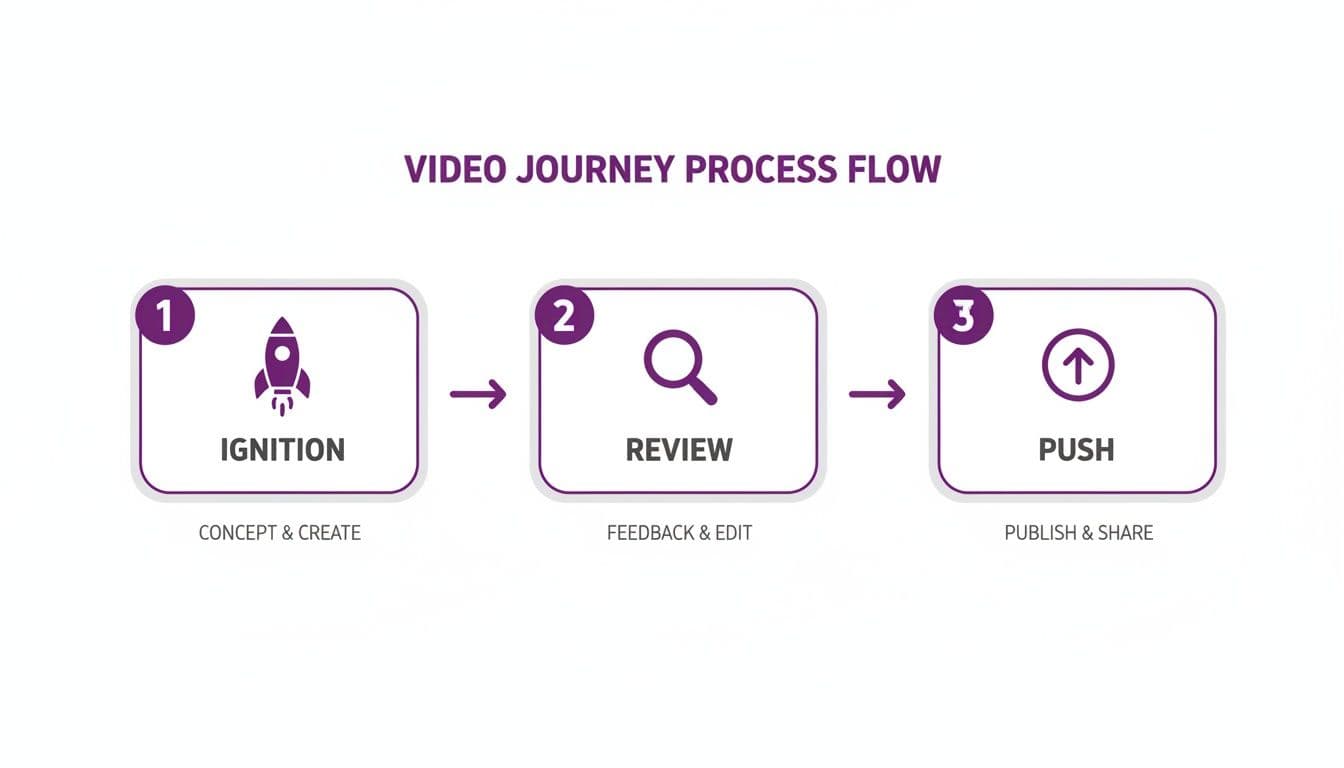
As you can see, that initial spark of engagement in the "Ignition" phase is what determines if your video gets a wider "Push."
Comments and Follows: Building Community and Authority
Comments are a great sign that you're building a real community. When a viewer is moved enough to type out a response, it shows they're more deeply invested in your content. Taking the time to reply to comments creates a positive feedback loop, which encourages even more interaction and tells the algorithm your post is a conversation starter.
Finally, the follow is the ultimate vote of confidence. When someone follows you after watching just one video, it’s a powerful signal that your content was so good, they actively want to see more from you. This builds your credibility and makes it much more likely your future videos will land on their For You Page, helping you build a loyal fanbase over time. For a deeper look at what these different interactions mean, you can check out our guide on social media engagement metrics.
How the 2026 US Algorithm Shift Affects Your Strategy
If you're a creator in the United States, the game has changed. While everything we've covered about the TikTok algorithm still holds true, a massive structural shift has added a new, critical layer to your strategy. The algorithm is literally being retrained with an American accent.
This all kicked off back in September 2025, when control of the algorithm was handed over to Oracle. This move, which limited ByteDance to under 20% ownership, was all about retraining the algorithm on purely American data for security purposes. Ever since, from Q4 2025 through Q2 2026, creators have been riding a roller coaster of engagement volatility. You can get more of the backstory on this major historical shift at GRIN.co.
Navigating the New US-Centric Model
So, what does this actually mean for you? The biggest takeaway is that the algorithm now heavily favors US-centric content. The old algorithm was like an international jet-setter, importing trends from all over the world. The new one is a local, tuned in to what’s happening right here in the United States.
For karaoke and lyric video channels, this has some pretty direct implications.
- Song Selection: You'll want to lean into songs topping the US charts or tracks that trigger strong nostalgia for an American audience. That obscure international banger might have a harder time finding an audience now than it did a year ago.
- Cultural References: Think about the signals you're sending. Your backgrounds, your text overlays, even the font you use should connect with US culture. A subtle backdrop of the Chicago skyline or a classic American diner can give the algorithm powerful contextual clues.
- Trend Spotting: Keep your finger on the pulse of trends born in the USA. Jumping on these early is more crucial than ever before.
The Rise of Localized Content
To double down on this American focus, TikTok has been pushing features that surface local content. The most obvious example is the ‘Local Feed,’ a whole separate feed dedicated to videos from creators in your immediate area.
The new algorithm isn't just thinking nationally; it's drilling down to the city and state level. This is a golden opportunity to connect with a super-engaged local audience that was much harder to reach before.
This push for localization gives a real edge to content with a regional feel. Imagine a karaoke video of a song by a beloved Texas artist or a lyric video shot at a landmark everyone in your city recognizes. That kind of content has a much better shot at getting an initial boost from the algorithm.
Adapting Your Strategy for Stability and Growth
During this transition, it's completely normal to see your view counts swing wildly. Early tests in 2026 saw engagement volatility spike by 20-30% for some music videos in discovery. The key is not to panic. This is just the algorithm recalibrating itself in real time.
Your best defense is consistency and creating high-retention videos. This is where lyric videos shine, as they're built for high completion rates. Make sure your execution is flawless—perfectly synced audio and compelling visuals—to give the new algorithm every signal that your content is top-tier.
By leaning into US-centric themes and tapping into local appeal, you can find your footing, stabilize your reach, and set your channel up for serious growth in this new chapter of TikTok.
Proven Strategies for Karaoke and Lyric Video Channels
Alright, we've pulled back the curtain on how the TikTok algorithm works. Now, let's get practical and talk about how to apply this knowledge specifically to karaoke and lyric videos. This niche is a fantastic space to be in, but it’s also crowded. The key is to create polished, trend-aware videos that give the algorithm exactly what it’s looking for: content that keeps people watching from start to finish.
This isn't about throwing spaghetti at the wall and seeing what sticks. It's a proven playbook for this specific format. When you combine smart trend-spotting with high-quality production, you’ll start sending all the right signals to the For You Page.
Jump on Trends with High-Quality Karaoke Versions
One of the surest ways to get the algorithm’s attention is to ride the wave of a trending song. When a track starts climbing the charts or becomes the sound for a new viral challenge, you can bet people are searching for it. This is your moment to shine, but speed can't come at the expense of quality.
Your goal should be to create the definitive karaoke version of that trending song. Don't just rush something out. Instead, focus on:
- Flawless Audio: Use a crystal-clear instrumental. Nothing makes a viewer swipe away faster than muddy or low-quality sound.
- Perfect Sync: The lyrics have to appear on screen at the exact moment they’re sung. Even a tiny delay can throw off the whole experience and tank your watch time.
- Clean Visuals: Your background should be high-quality and unobtrusive. The sing-along experience is the star of the show.
When you deliver a polished version of a song at its peak popularity, your channel becomes a valuable resource. The algorithm sees users searching for that sound and finding your high-quality video, giving you a massive boost in discoverability.
Optimize Lyric Videos for Maximum Watch Time
With lyric videos, your one and only mission is to keep eyes on the screen until the very last second. Every single design choice you make should support that goal. Remember, completion rate is a golden metric for TikTok; when someone watches your entire video, it's a huge vote of confidence.
Your lyric video isn’t just a backdrop for a song; it's a visual performance. The way the words move, the colors you choose, and the pacing of the text all contribute to whether a viewer stays or swipes.
To really push that watch time up and make your videos more mesmerizing, nail these design elements:
- Readability is King: Use bold, clear fonts that are easy to see on a small phone screen. Your text color needs to have strong contrast against the background. No excuses.
- Dynamic Text Effects: Static text is boring. Use subtle animations, color changes, or word-by-word highlights that move with the song's energy. These little details keep the viewer’s brain engaged.
- Aesthetic Cohesion: The entire visual style—from the background image to the fonts—must match the song's mood. A somber ballad demands a completely different look than an upbeat pop anthem.
If you want to dig deeper into making your videos look more professional, check out our guide on essential TikTok video editing tips that can give you an edge.
The following checklist is a great way to double-check your work before hitting "Post." Think of it as your pre-flight inspection to make sure you're giving the algorithm every reason to promote your video.
Karaoke Video Optimization Checklist
| Optimization Area | Action Item | Impact on Algorithm |
|---|---|---|
| Audio Quality | Use a clean, high-bitrate instrumental track. | High-quality audio is a positive signal that encourages longer watch times. |
| Lyric Sync | Triple-check that lyrics appear with perfect timing. | Perfect sync directly improves user experience and increases completion rates. |
| Visual Readability | Choose a bold font and high-contrast color scheme. | Makes content accessible and prevents viewers from swiping due to frustration. |
| Text Animation | Add dynamic effects that match the song's rhythm. | Increases visual interest, holds attention, and boosts overall watch time. |
| Hook (First 3 Sec) | Start with the song title, artist, and a compelling visual. | A strong hook is critical for stopping the scroll and reducing early drop-offs. |
| Hashtags | Use a mix of broad, niche, and song-specific tags. | Helps the algorithm categorize your content and show it to relevant audiences. |
Sticking to this checklist will consistently put you in a better position to succeed. It's about being intentional with every video you create.
Build a Smart and Balanced Hashtag Strategy
Think of hashtags as signposts. They tell the algorithm what your video is about and who might want to see it. A huge mistake many creators make is only using massive, generic tags like #karaoke or #lyrics. Sure, include them, but they’re incredibly crowded.
A much better approach is to use a strategic mix that creates a funnel, attracting a broad audience while also homing in on true fans.
- Broad Hashtags (1-2): Use the big ones like
#karaoke,#lyricvideo, or#musictokto get general exposure. - Niche Hashtags (2-3): Now, get specific. Target a genre, an artist's fanbase, or even a decade. Think
#80spopkaraoke,#oliviarodrigolyrics, or#rockballads. - Song-Specific Hashtags (1-2): This is non-negotiable. Always tag the song title and artist, like
#asitwasand#harrystyles. This is how you catch people searching for that exact track.
This balanced strategy helps your video gain momentum in smaller, more engaged communities first. Once it proves itself there, the algorithm is far more likely to test it with a wider audience. It's a reliable method for getting your content in front of the right people, every single time.
Common TikTok Algorithm Myths Debunked
If you spend any time looking for TikTok advice, you'll find yourself wading through a sea of bad takes and outright misinformation. It's a real problem. Following the wrong advice can send your content strategy spinning in circles, leaving you frustrated and wondering why you aren't growing.
Let's cut through the noise. A lot of creators are terrified of making a "wrong move," but most of these fears are rooted in rumors, not reality. Once you can separate fact from fiction, you can build a strategy that actually works instead of chasing ghosts.
Myth 1: Deleting Videos Hurts Your Account
This is easily one of the most common fears I hear from creators. The story goes that if you delete a video that didn't do well, TikTok will "punish" your account and tank the reach of your future posts.
Thankfully, this is completely false.
TikTok has never said anything about deleting videos causing a negative hit to your account. The algorithm looks at every single video independently. If you post a banger that hooks people in, it's going to get pushed out—even if you just deleted five flops right before it.
The Reality: There's no such thing as an overall "account score" that drops when you delete a video. Go ahead and clean up your profile. It's much better to curate a strong feed that shows off your best work than to hold onto content that just didn't land.
Myth 2: You Must Post at a "Magic" Time
You’ve seen the posts: "The absolute best time to post on TikTok is 6:47 PM on a Tuesday!" While there's a grain of truth here—posting when your audience is online is smart—there is no universal magic hour that guarantees success for everyone.
The only "best time" is what's best for your specific audience.
Think about it. An account that makes lyric videos for late-night study playlists will have a completely different peak time than an account creating high-energy morning workout routines. Using a generic "best time" could mean you miss your actual audience entirely.
Instead of guessing, use TikTok's own data. Here's how:
- Head into your profile and tap Creator Tools.
- Go to Analytics and open the Followers tab.
- Scroll down until you see the Follower activity chart. This graph shows you the exact days and hours your followers were most active over the last week.
That data right there? That's your personal magic window. Post just before or right as those peaks begin to give your content the best possible launchpad for that crucial initial engagement.
Myth 3: Shadowbanning Is a Punishment
"Shadowban" is a term that gets thrown around constantly. Creators use it to describe a sudden, dramatic drop in views, believing TikTok is secretly suppressing their reach as some kind of penalty.
While a sudden nosedive in views definitely happens, it's almost never a punitive "shadowban."
TikTok has been very clear on this: they don't secretly limit accounts without telling you. If your video breaks the rules, you'll get a notification, and the content will be taken down. A sudden drop in views is almost always caused by something else.
Here are the most likely culprits:
- Content Under Review: Your video might have been flagged by the automated system for a potential guideline violation. When this happens, it's put on hold for a human to review, temporarily freezing its distribution.
- Low Engagement Signals: The video simply didn't resonate with the first small group of viewers. If people scrolled away quickly, the algorithm just didn't push it out any further.
- Server-Side Glitches: Let's be real, sometimes things just break. Technical hiccups on TikTok's end can cause views to freeze or analytics to report incorrectly for a while.
So, if your views suddenly flatline, don't jump to the shadowban conclusion. First, double-check your content against the Community Guidelines. Then, dive into that video's specific analytics and see where you lost your audience. Nine times out of ten, the answer lies in the content's performance, not a secret penalty.
Your Top TikTok Algorithm Questions, Answered
Alright, even with a solid grasp of how the TikTok algorithm works, some questions always pop up. Let's tackle some of the most common ones I hear from creators, breaking them down into simple, no-nonsense answers.
How Quickly Does the Algorithm Start Pushing a New Video?
Instantly. The second you press that "Post" button, the clock starts ticking. Your video is immediately shown to a small test group. What happens next is entirely up to how that initial audience reacts within the first couple of hours.
If you get strong early signals—people are watching it all the way through, sharing it right away—the algorithm hits the accelerator. If that first impression is weak, distribution will probably slow to a crawl or stop completely. The key takeaway is that this evaluation is both immediate and continuous.
Does Video Length Actually Matter?
Yes, but it's not about finding a "magic" number of seconds. The metric that truly matters is completion rate. This is the percentage of people who watch your video from the very beginning to the very end.
A 10-second video with a 90% completion rate is way more powerful in the algorithm's eyes than a 60-second video with a 30% completion rate. Your real goal is to make your video exactly as long as it needs to be to get your point across, and not a single second longer.
Can I Bring an Old, Dead Video Back to Life?
Realistically, it’s next to impossible. Once a video's initial push has fizzled out, reviving it is an uphill battle. The algorithm is built to prioritize fresh content and makes its big decisions based on that critical first performance window.
Instead of trying to resuscitate a flop, you're much better off figuring out why it didn't perform well and pouring that knowledge into your next video. However, if you believe the idea was golden but the execution was off, you can always try re-editing and reposting a better version.
How Can I Tell if My Video Is Being Shown to a New Audience?
The best way is to keep a close eye on your analytics. Have you ever noticed a video suddenly get a new spike in views days or even weeks after it first went quiet? That's often the algorithm testing your content with a completely new group of people.
You might see this happen when:
- A sound or trend related to your video suddenly blows up again.
- You start getting comments from a totally different demographic than your usual crowd.
It’s a great reminder that truly good content has a long shelf life, even if its main viral moment seems to be over.
Ready to create stunning karaoke and lyric videos that captivate your audience and boost your watch time? MyKaraoke Video uses AI to automatically sync lyrics to your music, letting you produce professional-quality content in minutes. Stop wrestling with complicated software and start making videos the algorithm will love. Try MyKaraoke Video today!
