Before you book a venue or even think about catering, every great corporate event starts with a solid blueprint. This isn't just about picking a date; it's about laying the groundwork that ensures every single decision you make down the line is strategic and serves a purpose.
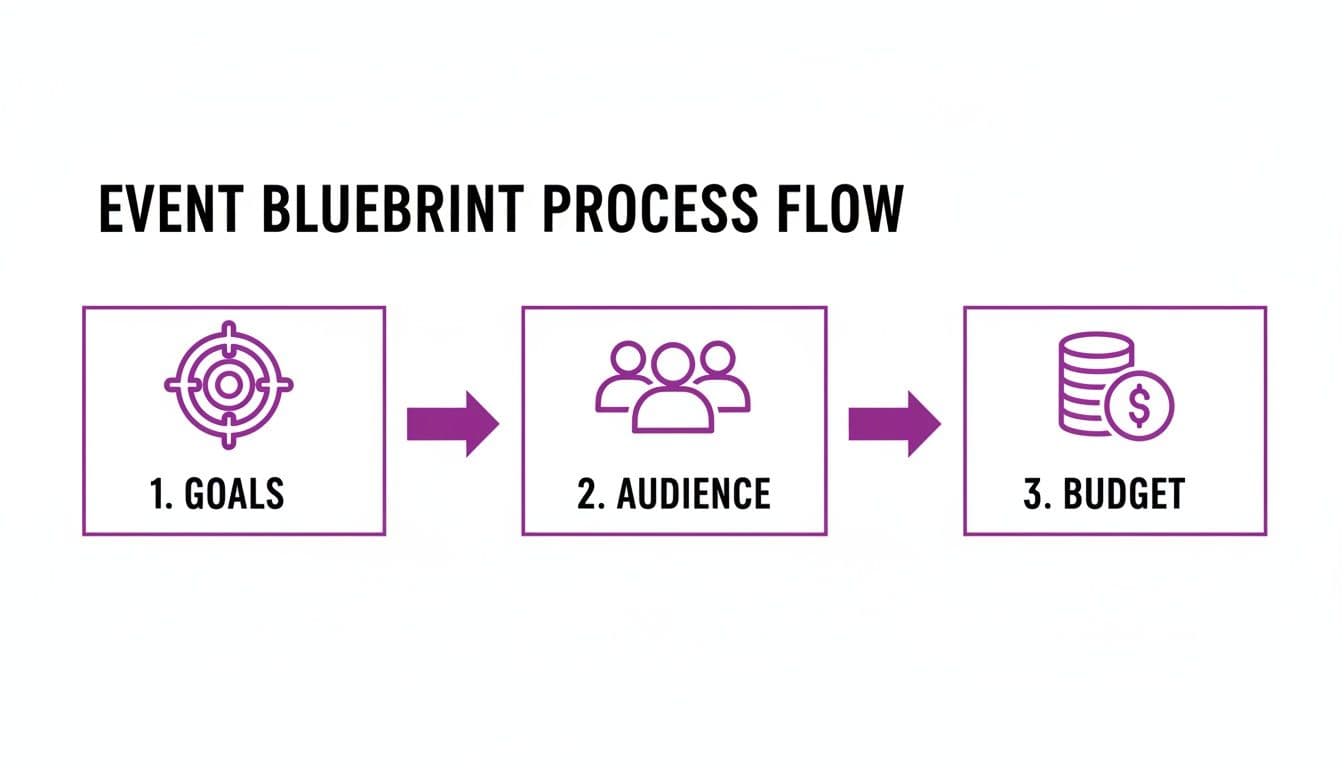
Think of it as the foundation of a house. Get these first three pillars right—your goals, your audience, and your budget—and you're setting yourself up for an event that doesn't just happen, but actually delivers real, measurable value.
Building Your Event Blueprint From The Ground Up
Every truly memorable event I've ever planned started with one simple question: Why are we doing this? This is where you move from a vague idea ("we should host a client event") to a rock-solid, actionable plan. Honestly, nailing this part is the most critical piece of the entire puzzle.
This is your chance to define what success actually looks like. Is it about generating a specific number of qualified leads for the sales team? Maybe it's about boosting morale after a tough quarter. Or perhaps you're launching a new product and need to make a huge splash in the industry. Whatever it is, get specific.
Define Your Core Objectives
Vague goals are the enemy of a successful event. "Brand awareness" is nice, but it's not a goal you can build a strategy around. You need sharp, measurable objectives that will not only guide your planning but also help you prove the event's worth to your stakeholders later.
Let's get concrete with some examples:
- Lead Generation: Instead of just "get leads," aim for "generate 150 qualified leads from director-level attendees in the fintech sector."
- Team Building: Don't just "boost morale." Target "achieve a 90% positive feedback score on post-event employee surveys regarding company culture."
- Product Launch: Forget "create buzz." Set a goal to "secure 20 media mentions in top-tier publications and 500 social media posts using our official event hashtag."
A well-defined objective becomes your North Star. Every time a decision comes up—from the keynote speaker to the type of coffee you serve—you can ask, "Does this help us achieve our primary goal?" If the answer is no, you know what to do.
The table below breaks down how to connect your event's purpose with the key performance indicators (KPIs) that prove its success to stakeholders.
Connecting Event Goals to Real-World Metrics
| Event Goal | Primary KPI | Example Metric |
|---|---|---|
| Generate Sales Leads | Marketing Qualified Leads (MQLs) | Number of badge scans at the product demo booth that result in a scheduled follow-up meeting. |
| Enhance Brand Loyalty | Net Promoter Score (NPS) | Post-event survey score asking, "How likely are you to recommend our company to a friend or colleague?" |
| Employee Training | Skill Assessment Score | Average percentage improvement on a pre- and post-event knowledge quiz. |
| Product Launch Buzz | Media & Social Mentions | Total number of articles and unique hashtag uses during the launch week. |
This kind of thinking forces you to be strategic from day one, ensuring your event is an investment, not just an expense.
Know Your Audience Inside And Out
Once you know why you're hosting the event, the next question is who it's for. This goes so much deeper than basic demographics. You need to create detailed attendee personas to design an experience that truly connects with them.
For a tech conference, for instance, you might have "Marketing Maria." She's a 32-year-old marketing manager at a mid-sized SaaS company. She's not just there to fill a seat; she wants to learn about new AI tools and network with peers who understand her challenges. Her biggest pain point is a lack of time, so she'll value short, punchy sessions and structured networking over a long-winded keynote. Knowing this helps you shape everything from the agenda to the food choices.
Craft A Realistic Event Budget
Your budget is the guardrail that keeps your creative vision grounded in reality. The best approach is to start by listing every conceivable expense, from the obvious down to the details people often forget.
Break it down into major categories:
- Venue Rental: The cost for the physical space.
- Catering: All food, drinks, and service staff.
- AV & Production: Mics, speakers, screens, lighting, and tech support.
- Marketing & Promotion: Digital ads, email campaigns, printed signage.
- Staffing: On-site coordinators, security, registration desk crew.
And here’s a pro tip: always, always build in a contingency fund of 10-15% of your total budget. This isn't just "nice to have"; it's a lifesaver for those inevitable surprises, like a last-minute equipment rental or needing to hire extra help.
The event world is definitely a hybrid one now. While industry data shows 83% of meetings will have an in-person component, planners are getting smarter about offering flexible options. That said, live events aren't going anywhere—they still make up 60% of the market, proving that face-to-face connection is as powerful as ever.
For a much deeper dive into the nitty-gritty of mapping out every detail, this guide on How to Plan Corporate Events: Expert Tips & Strategies is one of the best resources out there.
Choosing Your Venue and Vendor Dream Team
Alright, you've got your event blueprint in hand. Now comes the exciting part: finding the physical space and the expert partners who will bring your vision to life. Don't underestimate this step—your choice of venue and vendors is one of the biggest calls you'll make, impacting everything from the attendee experience to your bottom line. This isn't just about booking a room; it's about building your A-team.
The right venue sets the entire tone before a single guest walks through the door. A sleek, modern hotel ballroom sends a completely different message than a rustic barn or an industrial-chic warehouse. Think back to your goals and the audience you're trying to reach. Hosting a high-tech product launch for developers? A venue with flawless, high-speed Wi-Fi and top-tier AV is non-negotiable. Planning a client appreciation dinner? The ambiance and quality of the food will be front and center.
Finding the Perfect Event Venue
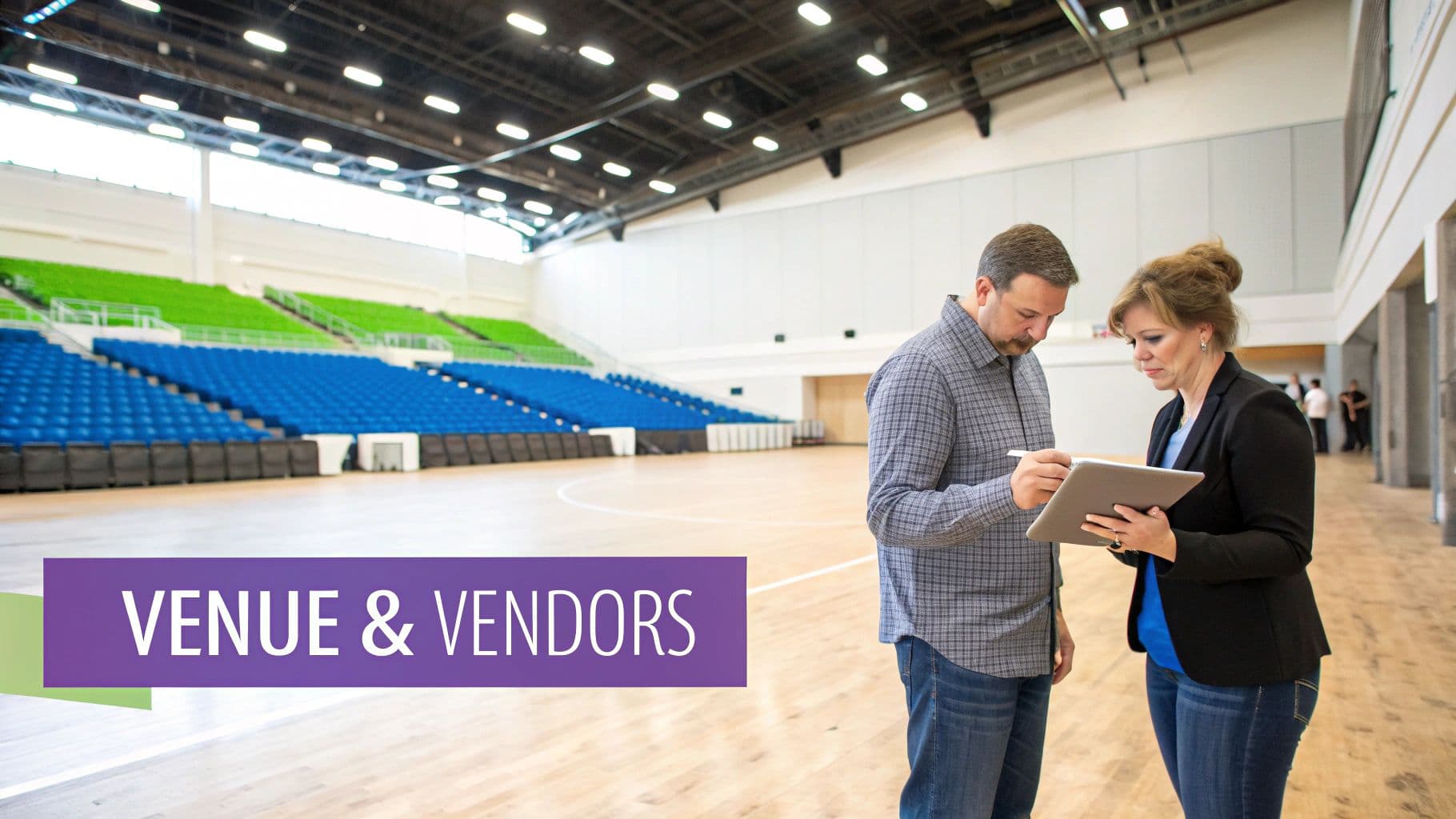
When you start your search, you have to look past the glossy photos and headline capacity numbers. During a site visit, you need to put on your detective hat. A beautiful space with terrible accessibility or a laundry list of hidden fees can turn into a logistical nightmare fast.
When you do a walkthrough, get ready to ask some tough questions:
- What's actually included? Get this in writing. Does the rental fee cover tables, chairs, and basic AV, or are those all expensive line items waiting to surprise you?
- Are there vendor restrictions? Some venues lock you into their "preferred" (and often pricey) list of caterers or AV companies. This can severely limit your options and inflate your budget.
- What are the labor and service fees? Ask directly about mandatory charges for setup, breakdown, security, and corkage. These can easily add 20-30% to your final bill if you're not careful.
- How’s the access? Check everything from ramps and elevators to restrooms. And don't forget about parking and public transport—how will your guests actually get there?
A venue contract can look intimidating, but you absolutely must read the fine print on cancellation and liability. What happens if you need to postpone? Who's on the hook if a piece of equipment gets damaged? A clear contract protects everyone and saves you a world of headaches later.
Assembling Your Vendor A-Team
With your venue locked in, you can start building your team of specialists: caterers, AV technicians, photographers, florists, entertainment, you name it. The goal is to find partners whose style and expertise feel like a natural extension of your event's vision. Don't just shop on price; think about the value and experience they bring.
For example, when you're picking a caterer, always schedule a tasting. It's the only real way to know if the food lives up to the proposal. For AV, find a team that has worked in your venue before. A technician who already knows the room's quirks and power limitations is worth their weight in gold.
Vetting and Managing Your Partners
Juggling multiple vendors requires clear communication and a bit of organization. Think of them as true partners in your success, not just hired hands. When you're comparing proposals, a simple spreadsheet can be your best friend for an apples-to-apples evaluation.
Make sure every single vendor contract includes these four things:
- A Detailed Scope of Work: The contract needs to spell out exactly what they're providing, down to setup and breakdown times.
- A Clear Payment Schedule: Note all deposit due dates and final payment deadlines to keep your cash flow in check.
- The Cancellation Policy: Understand the financial consequences if you—or they—have to cancel.
- Proof of Insurance: Every professional vendor should provide a certificate of liability insurance without you even having to ask. It's a non-negotiable that protects your company.
The right entertainment can completely elevate the atmosphere. For inspiration on interactive experiences, our guide on corporate team-building activities has some great ideas. Once you've secured your venue and vendors with confidence, you can finally dive into designing the experience itself.
Designing an Experience That Wows Your Attendees
With the logistical blueprint in place and your vendors lined up, it’s time for the really creative part: designing the actual experience. This is where you move beyond spreadsheets and floor plans to craft the journey your guests will take. A well-organized event is one thing, but an unforgettable one is an immersive experience that pulls people in from the moment they arrive.
The goal here is to make everything feel intentional. Every single detail, from the music playing during breaks to the topics chosen for breakout sessions, should tie back to your event's purpose and speak directly to your audience. This is how you elevate a standard corporate function into something people will talk about for months.
Building a Compelling Agenda
Your agenda is the backbone of the entire experience. I've seen too many events fail because they either crammed the schedule or left it too loose. The sweet spot is a thoughtful balance between high-value content and genuine opportunities for people to connect. After all, networking is almost always a top reason people show up.
Think about the natural rhythm of the day. A long string of back-to-back lectures is a recipe for glazed-over eyes and an audience glued to their phones. You have to mix it up to keep the energy alive.
- Keynote Sessions: These are for your heavy hitters. Bring in dynamic speakers who can grab the audience's attention and set the tone for the entire event.
- Interactive Workshops: Ditch the one-way lecture format. Small, hands-on sessions where attendees can solve a real problem or learn a tangible skill are incredibly valuable.
- Panel Discussions: Get a lively debate going. Bringing together a few different perspectives on a hot-button industry topic is always a crowd-pleaser, especially if you leave ample time for audience questions.
- Structured Networking Breaks: A simple coffee break is a missed opportunity. I like to set up themed tables or provide conversation-starter prompts to get people talking to someone new.
We're also seeing a major shift away from massive, impersonal conferences. Many companies are finding more value in smaller, more focused regional events. This approach fosters much deeper connections and allows for a more personalized agenda that speaks to a specific community's needs.
Infusing Entertainment and Interactivity
Entertainment isn't just filler—it's a strategic tool for breaking the ice and creating those shareable, "you had to be there" moments. The right activity can completely transform a stiff corporate atmosphere into something vibrant and memorable.
One of my favorite ways to do this is with a shared activity that gets everyone involved without feeling forced. Digital karaoke, for example, is a fantastic icebreaker. Using a tool like MyKaraoke Video, you can even create custom lyric videos that feature company branding or inside jokes, making it a uniquely personal touch.
Entertainment isn't an afterthought—it's a strategic part of the attendee journey. A shared laugh or a moment of fun can be just as valuable as a keynote speech for building relationships and fostering a positive brand association.
This kind of activity works perfectly for a welcome reception or an end-of-day celebration. It’s an inclusive and fun way to get people from different departments and seniority levels to connect as people, not just colleagues. For more ideas, check out our guide on https://www.mykaraoke.video/blog/employee-engagement-event-ideas.
Crafting the Complete Attendee Journey
The attendee experience doesn't start at check-in and end with the last session. It's a complete journey with multiple touchpoints, and each one needs to feel seamless and positive.
- Before the Event: Start building excitement early. Send engaging emails that spotlight key speakers and exclusive sessions, giving people a reason to look forward to the day.
- The Arrival: First impressions are everything. A clunky check-in process can sour the mood instantly. Aim for a smooth, welcoming arrival with clear signage and friendly staff.
- During the Event: Comfort is key. Pay attention to details like lighting, sound, and easily accessible amenities. An event app can be a huge help for sending reminders and helping people network.
- The Departure: Don't let the energy fizzle out at the end. Sending attendees home with thoughtful corporate event goodie bags filled with items they'll actually use is a great way to end on a high note.
- After the Event: The conversation isn't over. Follow up with a personalized thank-you email and a short feedback survey. Sharing photos and session recordings helps reinforce the event's value and keeps the momentum going.
Mastering Your Event Day Execution
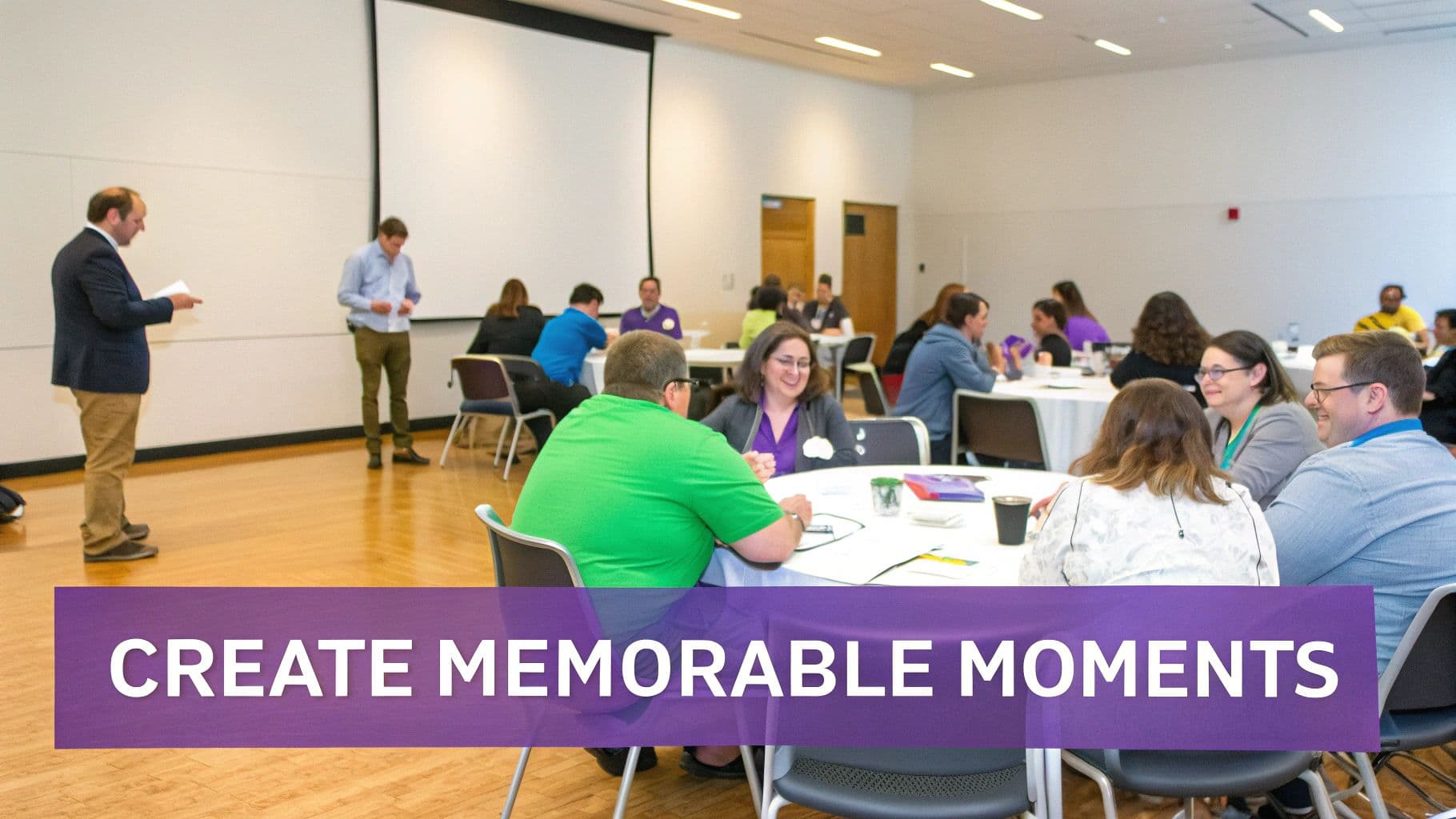
After all the emails, spreadsheets, and late nights, event day is finally here. This is where the magic happens, but that "magic" is really just the result of obsessive preparation. A seamless, professional event doesn't run on luck; it runs on a master script that dictates every single move.
That script is your run-of-show. Think of it as the single source of truth for your entire team. This isn't just a high-level agenda. It's a granular, minute-by-minute playbook that choreographs everything from the first vendor loading in to the last guest heading home.
Building Your Run-of-Show
A truly great run-of-show leaves no room for interpretation. It’s the document that prevents chaos by detailing who does what, where they do it, and precisely when. It empowers your team to act decisively without having to hunt you down for every little thing.
Your document should be built around a few essential columns:
- Time (and Duration): Break down the day into 5 to 15-minute increments. Be specific.
- Activity/Item: Describe the action. Instead of "Keynote," write "Keynote Speaker A walks on stage."
- Location: Pinpoint the exact spot, like "Main Ballroom Stage" or "West Foyer Registration Desk."
- Key Personnel: Name names. Who is the point person for this task? "AV Tech Lead" or "Catering Captain."
- Notes: This is for the critical details. "Cue walk-on music" or "Confirm dietary meals are ready."
This level of detail is your best defense against confusion. When everyone knows their cues, the whole event just flows. It creates a polished, effortless experience for your attendees. Speaking of which, if you're looking for ways to elevate that experience, you might want to check out some unique corporate event entertainment ideas that can be easily woven into your schedule.
Managing Your On-Site Team
Remember, your on-site staff and volunteers are the face of your event. Their confidence and competence directly shape how your guests feel. The key is to manage them effectively, and that starts way before the doors open.
Hold a comprehensive pre-event briefing. This is your moment to walk everyone through the run-of-show, clarify their roles, and field any last-minute questions. Give them a one-page "cheat sheet" with key contacts, a venue map, and answers to common questions. Most importantly, set up a clear communication channel—a dedicated WhatsApp group or old-school walkie-talkies work wonders for resolving issues in real-time.
A well-informed team is a confident team. When your staff knows the plan and can communicate effectively, they can handle minor issues on their own, freeing you up to focus on the bigger picture and any major challenges that arise.
Preparing Your Contingency Plans
What separates a seasoned pro from an amateur? A solid Plan B. And a Plan C. Trust me, something will go wrong. A speaker will get stuck in traffic, the Wi-Fi will die at a critical moment, or a piece of equipment will fail. The goal isn't to prevent every possible hiccup but to have a pre-planned solution ready to go.
Before the event, sit down and brainstorm potential disasters. Then, document your response for each one.
Common Problems and Your Plan B
| Potential Issue | Contingency Plan (Plan B) |
|---|---|
| Keynote Speaker is Late | Have a backup mini-session, an engaging emcee, or a planned networking activity ready to fill the gap. |
| Venue Wi-Fi Goes Down | Keep a mobile hotspot in your go-bag for critical functions like registration and presentations. |
| Unexpectedly High Attendance | Pre-arrange with the venue to have extra chairs and catering overflow options on standby. |
| Medical Emergency | Make sure every staff member knows the location of the first-aid station and who the designated emergency contact is. |
Having these solutions documented and discussed with your team beforehand is a massive confidence booster. Instead of panicking, your team can calmly pivot to the predetermined fix. Often, attendees won't even notice anything was amiss. This proactive mindset is the final, critical piece of nailing your event day execution.
How to Measure Your Event's True Impact and ROI
When the last guest walks out the door, it’s tempting to breathe a sigh of relief. But the real work—the work that proves your event’s value—is just getting started. This is your moment to connect the dots between all that planning and the actual results, turning a one-time gathering into a powerful growth engine for your business.
This isn’t just about proving the event was a "nice to have." It's about demonstrating it was a strategic investment. We need to move beyond asking "Did people have a good time?" and start answering, "Did we move the needle on our business goals?"
Tying Data Back to Your Original Goals
Before you look at a single number, pull out the goals you set in the very beginning. Every metric you track should be a direct answer to one of those initial objectives. It’s the only way to avoid drowning in vanity metrics and focus on what actually matters.
And remember, different goals demand different proof points.
- If you were after leads, your CRM is where the truth lives. How many of those badge scans turned into Marketing Qualified Leads (MQLs) or better yet, Sales Qualified Leads (SQLs)? Go deeper. What’s the conversion rate from those leads into closed deals over the next quarter? That’s the money metric.
- If brand awareness was the name of the game, dive into your social analytics. What was the total reach of your event hashtag? Did you land any media mentions? Keep an eye on your website analytics for a noticeable spike in traffic or brand name searches during and right after the event—those are strong signals.
- For an internal employee event, a sharp post-event survey is your best friend. Don't just ask if they liked the food. Ask targeted questions that measure morale, connection, and alignment. A high Net Promoter Score (NPS) from your own team is a powerful story to take back to leadership.
The best post-event reports don't just spit out data; they tell a story. You need to frame every number around the original 'why' of your event. This shows stakeholders not just what happened, but why it was a brilliant investment of their time and money.
Crafting a Compelling Post-Event Report
Think of your post-event report as the official record of your success. It needs to be clear, concise, and easy on the eyes. An executive should be able to scan it in five minutes and get the big picture. Don't just dump a spreadsheet on their desk—provide context and analysis that spells out the wins and offers smart ideas for next time.
This data-first mindset is no longer optional in corporate events. In fact, 50% of event professionals are already planning to bring artificial intelligence into their events, with another 24% prioritizing new tech to get an edge. These tools help track everything from registration trends to real-time attendee engagement, giving you the rich data needed for a killer report. If you want to get a better handle on this shift, you can discover key insights from the latest event industry statistics.
A simple, winning structure for your report looks something like this:
- Executive Summary: Just one paragraph. The elevator pitch of the event, its main goals, and the top-line results.
- Goals vs. Outcomes: A clean, side-by-side look at what you aimed for and what you delivered, backed by hard numbers.
- Key Highlights & Wins: This is where you shine. Showcase standout moments, glowing attendee testimonials, or any unexpected home runs.
- Learnings & Recommendations: Get real about what could have gone better. This isn't about admitting failure; it's about showing you're a strategic thinker who is already planning to make the next one even more successful.
Measuring your event’s success requires a mix of qualitative feedback and hard data. To get a clear picture, you need to know which metrics to track and have the right tools in your arsenal to capture them accurately.
Post-Event Metrics and The Tools to Track Them
| Metric Category | Specific KPI | Measurement Tool |
|---|---|---|
| Lead Generation | MQLs, SQLs, Pipeline Value | Salesforce, HubSpot |
| Audience Engagement | Session Attendance, Dwell Time | Eventbrite, Cvent |
| Brand Awareness | Social Mentions, Hashtag Reach | Sprout Social, Brandwatch |
| Attendee Satisfaction | Net Promoter Score (NPS), Survey Scores | SurveyMonkey, Typeform |
| Financial ROI | Cost Per Lead, Customer Lifetime Value | CRM, Financial Software (QuickBooks) |
| Website Impact | Referral Traffic, Branded Searches | Google Analytics |
By pairing the right metric with the right tool, you can build a comprehensive and persuasive report that leaves no doubt about your event's value.
The Power of Thoughtful Follow-Up
The event might be over, but your relationship with the attendees isn't. A smart follow-up strategy is what separates a good event from a great one. Ditch the generic "thanks for coming" email blast. Instead, segment your list and personalize your outreach based on who they are or what they did.
For potential customers, make sure the sales team gets a warm handoff with all the context they need about what that person was interested in. For your internal team, share a killer photo gallery or links to session recordings to keep the good vibes going. This final touchpoint is what cements the event's impact and keeps the conversation alive long after you've packed everything away.
Common Questions About Planning Corporate Events
When you're deep in the trenches of planning a corporate event, it's natural for questions to pop up. Getting every detail right is a huge task. Here, I'll walk you through some of the most common hurdles and queries I've seen over the years, offering some straightforward advice to help you plan with more confidence and sidestep those classic rookie mistakes.
How Far in Advance Should I Plan a Corporate Event?
This is probably the first question everyone asks, and the honest answer is: it completely depends on the scale of your event. Trying to cram a major conference into a few months is a surefire way to end up with limited options, inflated costs, and a whole lot of stress. I always tell people to work backward from their ideal event date.
Here’s a rough guide I use based on event size:
- Large Conferences or Galas (500+ attendees): You absolutely need to start planning 10-12 months out. This isn't just about booking a venue; it’s about having the time to secure the best keynote speakers, negotiate favorable contracts, and build a marketing campaign that actually gets people excited.
- Mid-Sized Events (100-500 attendees): For things like a regional sales kickoff or a company-wide retreat, a 6-9 month runway usually works well. It gives you plenty of breathing room for vendor selection and attendee logistics without feeling rushed.
- Small Events (Under 100 attendees): If you're putting together a smaller workshop, an intimate client dinner, or an executive offsite, you can typically pull it off beautifully in about 3-4 months.
The real advantage of starting early? Leverage. You get your pick of the best venues and vendors, not just what's left over. That alone can make or break your event.
What Is the Biggest Mistake to Avoid in Event Planning?
Hands down, the single most damaging mistake you can make is jumping into the "what" before you've nailed down the "why." If you start booking caterers and designing invitations without a crystal-clear objective, you're just planning a party, not a strategic event. This leads to a muddled experience for your guests and makes it impossible to prove your ROI later.
Before you spend a single dollar, get all your key stakeholders in a room (or on a call) and don't leave until you agree on the primary goal.
Is the purpose to generate sales leads? To celebrate your team and boost morale? To launch a new product with a bang? That single objective becomes your North Star, guiding every decision you make and turning your event from an expense into a genuine investment.
How Do I Make My Event Engaging for Everyone?
Real engagement isn't about one big, flashy moment. It's about creating a varied experience that gives everyone a way to connect. A one-size-fits-all agenda is guaranteed to bore some of your attendees and overwhelm others. The trick is to build in multiple touchpoints for people to participate in a way that feels comfortable to them.
Start with a diverse agenda. Don't just schedule back-to-back lectures. Mix in short, punchy keynotes with interactive workshops and, crucially, plenty of unstructured networking time. This caters to different learning styles and gives introverts and extroverts alike a chance to shine. Technology can also be your best friend here—live polls and Q&A apps during sessions ensure everyone gets a voice, not just the loudest person in the room.
And remember, inclusivity is key. This goes beyond just asking about dietary needs. Is the venue truly accessible for everyone? Is the entertainment something a diverse group can enjoy together? For example, an activity like group karaoke, powered by a tool like MyKaraoke Video, is a fantastic icebreaker. It gets people from different departments and leadership levels laughing and connecting on a human level, creating shared memories that last far longer than any PowerPoint slide.
Ready to add an unforgettable, interactive element to your next corporate event? MyKaraoke Video makes it easy to create custom, high-quality karaoke videos in minutes. Turn your company songs, inside jokes, or team anthems into a shared experience that gets everyone singing. Learn more and start creating at https://www.mykaraoke.video.
